
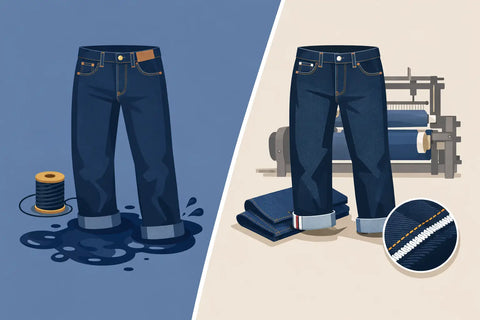
A dark, stiff pair of jeans with a clean outseam can look like a single category. It is not. Raw denim vs selvedge describes two different qualities of denim: one concerns the fabric’s finish, the other its edge. A pair can be raw, selvedge, both, or neither.
That distinction matters when you are buying for the long term. Raw denim changes through wear. Selvedge denim carries a particular weaving history and a recognizable construction detail. Neither automatically makes a better garment. Weight, yarn quality, cut, sewing, and the life you expect from the piece matter just as much.
Raw Denim vs Selvedge: The Essential Difference
Raw denim is denim that has not been washed after it is dyed and woven. It usually arrives dark, firm, and full of starch or loom-state character. The fabric has not been softened, faded, or distressed to create a worn-in appearance before it reaches you.
Selvedge, also spelled selvage, refers to the self-finished edge formed on narrow shuttle looms. Instead of leaving a loose, cut edge that needs an overlock stitch to prevent fraying, the loom creates a tightly woven border. On jeans, this edge is most often visible when the outseam is cuffed. A white edge with a colored line is common, but not universal.
The terms overlap because many makers choose to produce raw jeans from selvedge cloth. Still, they answer different questions. Ask whether denim is raw to understand how it will break in and fade. Ask whether it is selvedge to understand how it was woven and finished at the edge.
A washed selvedge jean is still selvedge. A raw jean made on a wider modern loom is still raw.
What Raw Denim Brings to the Wearer
Raw denim is an unfinished starting point. Its color settles, its creases develop, and its surface gradually reflects use. The results are not only visual. The fabric softens around movement: behind the knees, at the seat, through the hip, and along the pockets where hands, tools, or a phone return every day.
This is why raw denim has a devoted following. A well-worn pair records a particular routine rather than a factory-made version of one. High-contrast fades are possible, especially with rigid, deeply dyed fabric, but they are not the only outcome worth pursuing. Frequent wear, regular washing, and a less precious approach often create softer, more even color variation. Both are honest results.
There are trade-offs. Raw indigo can transfer onto light upholstery, footwear, bags, and pale garments, especially early on. The fabric may shrink if it has not been pre-shrunk or if it is soaked or washed hot. Rigid denim can take time to become comfortable. For some people, that process is the point. For others, it is unnecessary friction.
Not every raw denim garment needs a long no-wash ritual. Washing is care, not failure. When the garment needs it, wash it inside out in cool water with a mild detergent, then hang dry. This protects color better than harsh heat while keeping the fabric fresh and structurally sound. The best schedule depends on climate, activity, and how the garment is worn.
Sanforized and Unsanforized Raw Denim
Shrinkage is where raw denim demands attention. Sanforized denim has been mechanically pre-shrunk during production. It can still tighten slightly after a first wash, but sizing is generally more predictable.
Unsanforized denim, sometimes called shrink-to-fit, has not received that treatment. It may shrink noticeably in the waist, inseam, rise, and leg after soaking or washing. This fabric can offer a compelling irregularity and a closer connection to older production methods, but it requires deliberate sizing. Measure the garment, understand the expected shrinkage, and plan for it before committing.
Raw does not mean unsanforized. Many raw jeans are sanforized. The label should tell you which one you are considering.
What Selvedge Actually Changes
Selvedge denim is often associated with Japanese mills, vintage American workwear, and premium jeans. The association has a basis: shuttle looms are slower and narrower than many modern projectile or air-jet looms, and the resulting fabric can have a distinct density, texture, and irregularity. But selvedge is not a universal quality guarantee.
The self-finished edge is attractive because it is functional and direct. On a traditionally constructed jean, the outseam uses the selvedge rather than being cut and overlocked. Cuff the hem and the detail appears without ornament. It is a small signal of the fabric’s origin, not a reason to excuse poor pattern work or weak stitching elsewhere.
Narrow loom fabric also affects pattern layout. Because the cloth is commonly around 29 to 32 inches wide, a maker may need more fabric and more considered cutting than with wide denim. This can increase cost. It does not automatically improve fit, durability, or comfort.
A good non-selvedge denim can be exceptional. Wide-loom fabric may allow cleaner production efficiency, more consistent yardage, or a particular weight and texture that suits the garment better. For balloon pants, utility trousers, and looser workwear silhouettes, the fabric’s drape and density may matter more than whether a cuff reveals a ticker line.
The Selvedge ID Is Not the Whole Story
The colored thread at the selvedge edge is often called a selvedge ID. Red is familiar because of its history, but green, blue, yellow, or plain white edges do not indicate a fixed rank. They identify a mill’s fabric run or simply add a visual signature.
More useful questions are practical ones. What is the fabric weight? Is it slubby or smooth? Is the indigo rope-dyed or sulfur-dyed? Does the cloth feel dry and crisp, soft and hairy, or dense and compact? Are the seams felled where abrasion is highest? Is the pocket cloth substantial enough for daily use?
A visible selvedge edge is one detail in a construction system. Treat it that way.
Choosing the Right Pair for Your Wardrobe
Choose raw denim if you want the fabric to become personal through wear and are willing to accept its early stiffness, color transfer, and care considerations. It suits a wardrobe built around repeat use: the same trousers worn with an overshirt, a worker jacket, a knit, and a plain tee across changing seasons.
Choose selvedge denim if you value traditional loom-made cloth, enjoy the clean cuff detail, or are drawn to its texture and heritage. It can be raw or washed. A rinsed selvedge jean is often an intelligent middle ground: much of the fabric character remains, while shrinkage and dye transfer are easier to manage.
Choose neither as a requirement if the garment itself is right. A well-cut, non-selvedge, washed denim trouser may serve your life better than a rigid selvedge jean bought for its label. The point is not to collect technical specifications. It is to choose material and construction that support how you actually dress.
Fit should lead the decision. Waist measurements vary between makers. Rise changes how a trouser sits and moves. A straight leg, a tapered leg, and a rounded workwear shape each place the fabric differently on the body. Try to judge a pair uncuffed and cuffed, standing and sitting. Denim becomes more accommodating with wear, but it cannot correct a cut that does not work for you.
Care That Lets Denim Age Well
Wear denim with attention, not anxiety. Brush off dry dirt. Spot clean when appropriate. Repair a thinning pocket corner or broken belt loop before the damage expands. Small repairs belong to the life of workwear, especially on garments made to stay in rotation.
For washing, turn the garment inside out, fasten closures, use cold water, and avoid aggressive detergent or a dryer. Air drying helps preserve shape and reduces unnecessary stress on fibers. If the fabric feels stiff after washing, wear will bring back ease.
Raw denim rewards patience. Selvedge honors a particular method of making. But the better choice is always the pair that earns its place through regular use, repairs well, and still feels right after the first novelty has passed. Buy the fabric you want to live in, then give it a life worth showing.