
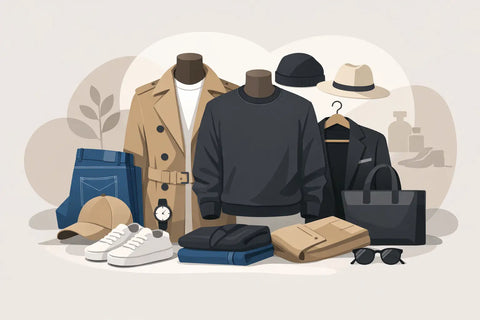
A good wardrobe tells on itself. You can see when it was built around novelty, and you can see when it was built with intent. The best unisex wardrobe staples do something quieter. They hold shape across seasons, across settings, across different bodies. They do not ask for constant replacement. They earn repetition.
That matters more in unisex dressing than most brands admit. A garment meant to work across body types cannot rely on trend proportion alone. It needs a balanced cut, practical detailing, and fabric with enough character to stand on its own. If the silhouette is too dependent on styling tricks or too thin in construction, it stops being versatile and starts being conditional.
The real test is simple. Can one piece move between work, travel, studio time, and everyday wear without feeling compromised? Can it be worn loose, fitted, layered, washed hard, and still make sense a year from now? Those are the clothes worth keeping.
What makes the best unisex wardrobe staples work
Unisex staples are not just basics with a broader size range. The strongest ones are built as systems pieces. Their value comes from proportion, material, and use.
Proportion comes first. A unisex garment should leave room for different bodies without collapsing into excess fabric. That usually means straighter cuts, dropped or relaxed shoulders, fuller sleeves that still taper with purpose, and rise measurements that allow flexibility in where a pant sits on the waist. The goal is not neutrality for its own sake. The goal is adaptability.
Fabric is what keeps that adaptability honest. Crisp cotton poplin, dense jersey, washed canvas, midweight denim, and sturdy twill all help a garment keep its line. Cheap fabric tends to expose weak design. Better fabric gives shape, drape, and longevity at once.
Then there is utility. Not performative utility with unnecessary straps or oversized pockets. Actual use. A jacket that layers over a knit but still works under a coat. Trousers with enough room to move. A shirt that looks considered tucked, untucked, or worn open. The best pieces do more because they ask less.
10 best unisex wardrobe staples to build around
1. The worker jacket
If there is one outer layer that consistently earns its place, it is the worker jacket. It is clean, direct, and forgiving across body types. A good one sits square through the body, with enough room for layering and a hem length that lands around the high hip or just below.
Look for cotton drill, moleskin, canvas, or garment-washed twill. These fabrics soften with wear without losing structure. Patch pockets are useful. Overdesigned closures are not. This piece works because it is rooted in function.
2. The photographer shirt
A proper oversized shirt is one of the most effective unisex garments in a wardrobe. It can be worn as a shirt, overshirt, or light outer layer. The key is balance. Too slim and it becomes body-specific. Too oversized and it drifts into costume.
A slightly longer body, dropped shoulder, and substantial cotton make it useful year-round. Poplin feels sharper. Brushed cotton feels easier. Either can work if the cut is considered.
3. Straight or balloon trousers
Trousers are where many so-called unisex collections fail. The rise is off, the seat is too shallow, or the leg line only suits one styling approach. A strong unisex trouser needs generosity in the top block and intention through the leg.
Straight trousers are the easiest place to start. Balloon shapes can be even better if the volume is controlled and the taper is clean. They create shape without clinging, and they adapt well to different heights and proportions. Utility trousers in twill or herringbone also age well because they are meant to move.
4. Dark, rigid denim
Soft stretch denim rarely improves with time. Rigid denim usually does. For a unisex wardrobe, dark indigo or washed black gives the most range. It reads clean enough for a relaxed office, direct enough for daily wear, and it only gets better once it begins to form to the person wearing it.
The cut matters more than novelty details. A straight leg or a gently curved leg tends to have the longest life. Mid to high rise is often more adaptable than low rise, especially across multiple body shapes.
5. A substantial white T-shirt
Not every essential deserves equal attention, but this one does. A white T-shirt only becomes a staple when the fabric weight, collar, and body shape are right. Thin jersey twists, slouches, and loses authority quickly. A denser cotton jersey with a firm neckband keeps its form and layers better.
The best version is not skin-tight and not exaggerated. Slightly boxy is usually enough. It should sit clean under a jacket and hold up on its own with trousers or denim.
6. The crewneck sweatshirt
A sweatshirt belongs on this list because it bridges private and public dressing better than almost anything else. It can be functional, refined, and forgiving at once. But it needs restraint. Avoid oversized branding, overwashed finishes, or fashion distressing that dates the garment.
French terry and brushed loopback both work. A ribbed hem and cuff should recover after wear, not stretch out by noon. Neutral tones earn more mileage, but a deep navy, faded olive, or iron gray can be just as versatile as heather gray.
7. A seasonless knit
Unisex knitwear works best when it avoids extremes. Too chunky and the garment dominates the look. Too fine and it loses substance. A medium-gauge crewneck or mock neck in cotton, wool, or a wool-cotton blend gives enough structure to layer while still feeling easy indoors.
Fit is the deciding factor here. A slightly relaxed body and clear shoulder line tend to work across more people than a narrow fashion fit. This is one place where buying for drape rather than exact body tracing makes the garment more useful.
8. The long coat
A long coat makes simpler clothes feel finished. It also proves whether a wardrobe has real range. In unisex dressing, coats succeed when they are cut with room through the shoulder and sleeve, with enough length to create presence without swallowing the frame.
Single-breasted styles are often easier to wear than double-breasted ones. Wool blends can be practical, but higher wool content usually wears better over time. If climate matters less, a dense cotton overcoat or waxed coat can fill the same role with more utility.
9. The practical skirt or dress
A unisex wardrobe does not have to default to pants. A practical skirt or dress belongs in the conversation when it is treated as a functional shape rather than a coded category. The right version has ease, pocket utility, and fabric weight that allows layering.
Think A-line utility skirts, apron-inspired forms, shirt dresses, or simple pull-on shapes in cotton twill, poplin, or denim. Worn over trousers, with knits, or under jackets, these pieces broaden the wardrobe instead of splitting it.
10. The everyday cap or tote
Accessories matter when they remove friction. A durable cap, a canvas tote, or a belt with honest hardware can unify a wardrobe without feeling styled for effect. The best accessories in a unisex system are low drama and high repeat.
That means natural canvas, brushed cotton, solid leather, and hardware that improves with handling. They should feel used, not precious.
How to choose the right unisex staples for your wardrobe
The smartest way to build is not to chase coverage in every category. Start where repetition already exists. If you wear trousers five days a week, the right pant matters more than an aspirational coat. If you layer constantly, invest in shirts and jackets before knitwear. Utility starts with your actual life.
Then check how each piece behaves across at least three situations. A staple should work dressed down, worn plainly, and layered with intention. If it only looks right in one exact outfit, it is probably not a staple.
Fit should stay flexible but not vague. Sizing up is not the same thing as buying a unisex silhouette. Better to choose garments designed with room, balance, and movement from the start. That is where brands rooted in workwear and utility tend to stand apart. The pattern cutting is usually more honest.
Why fewer, better staples age well
The appeal of a tight wardrobe is not minimalism for its own sake. It is clarity. You stop spending energy on clothes that solve only one moment. You begin to rely on pieces that improve through use.
That is especially true with garments shaped by workwear history. A worker jacket, utility trouser, or structured shirt carries enough purpose to remain relevant long after trend language changes. Details with a past. Forms for now. That principle holds because utility has a longer memory than fashion.
There are trade-offs, of course. Heavier fabrics can feel restrictive in heat. More generous cuts are not always the sharpest option in formal settings. And some body types may prefer adjusting proportions category by category rather than buying one uniform fit approach. That is not a flaw. It is just the difference between a concept and a wardrobe that actually gets worn.
The best unisex wardrobe staples are the ones you reach for without negotiation. Not because they are neutral, but because they are resolved. Good fabric. Clear cut. Real use. Buy better. Keep forever.
Build from there, and the wardrobe gets quieter in the best way.