
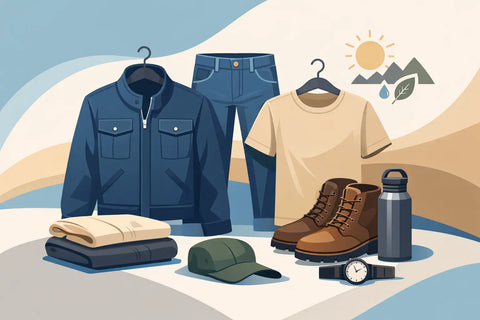
A jacket that collapses at the collar after one season is not a staple. Neither is a T-shirt that twists at the side seam or a pair of pants that shine at the knees after a month of wear. Durable everyday clothing essentials earn their place differently. They hold shape. They improve with use. They keep working.
That standard changes how you build a wardrobe. You stop buying for novelty and start buying for repetition. Not more pieces. Better ones. The kind that can move between commute, studio, office, travel, and weekend without needing explanation.
What makes everyday clothing truly durable
Durability is often reduced to fabric weight, but weight alone means very little. A heavy cloth with weak stitching, poor finishing, or unstable dye can fail just as quickly as a lighter one. Real durability comes from a system - material, construction, cut, and use considered together.
Start with fabric. Dense cotton twill, high-quality jersey, oxford cloth, ripstop, canvas, and well-made denim all have a clear role in a wardrobe built for wear. They resist abrasion, recover well, and age with character rather than collapse. Natural fibers tend to show life more honestly, which is often a strength. A faded knee, a softened sleeve, a washed-down seam - these can read as use, not damage.
Construction matters just as much. Look for clean seam finishing, reinforced stress points, stable plackets, durable buttons, bar tacks where strain collects, and collars or waistbands that keep their structure. None of this is decorative. It is the difference between clothing that lasts in a closet and clothing that lasts in motion.
Then there is cut. A garment that is too tight at the shoulder, thigh, or seat will fail faster, no matter how good the cloth is. Durable pieces need room to work. Not oversized for effect, but proportioned for movement. Workwear understood this long before fashion did.
The core durable everyday clothing essentials
The best wardrobes are built like a kit. Each piece should be able to carry its weight alone and work in combination with the rest.
The worker jacket
A proper worker jacket is one of the clearest examples of durable design. It is usually cut from twill, canvas, drill, or denim, with patch pockets, a straight hem, and enough room for layering. It sits between outerwear and overshirt, which makes it useful across most of the year.
What matters here is not nostalgia. It is function. A good worker jacket can be worn daily because it is uncomplicated, easy to repair, and rarely out of place. The fabric should soften without losing authority. The collar should sit flat. The pocket placement should make sense. If it looks better after fifty wears than it did on day one, it is doing its job.
The substantial shirt
The shirt doing real work in a wardrobe is not the flimsy one saved for careful days. It is the oxford, chambray, utility shirt, or photographer-style shirt with enough body to wear open or closed. This kind of piece bridges settings well. It can replace a light jacket, sit under tailoring, or carry a full day on its own.
A durable shirt should resist collapse at the cuffs and placket. It should also improve after laundering, not become thinner and more unstable. Slight irregularity in texture is welcome. It often signals character in the cloth rather than over-processing.
Utility pants and work pants
Trousers fail where life happens - knees, seat, pocket corners, hem. That is why durable pants tend to come from utility traditions. Balloon pants, fatigue trousers, straight work pants, and carpenter-informed shapes all share a practical logic. They allow movement, distribute strain better, and usually come in fabrics intended for abrasion.
The trade-off is silhouette. A slimmer pant may feel cleaner to some wardrobes, but if it restricts movement or places constant tension across stress points, durability suffers. The most reliable choice is often a shape with a little generosity through the leg and seat, then enough structure in the fabric to keep the line sharp.
Denim with integrity
Not all denim is built for age. Some is made to imitate the look of wear before it has earned any. Better denim starts rigid or semi-rigid, feels substantial in the hand, and forms to the body through use. It asks for patience, but gives more back.
Details matter. A stable waistband, sturdy pocket bags, clean rise proportions, and durable stitching at the inseam all extend life. Raw denim is not automatically better, and washed denim is not automatically worse. It depends on the quality of the base cloth and how aggressively it has been processed.
Jersey that can take repetition
The hardest-working pieces in most wardrobes are often the least discussed: T-shirts, long sleeves, sweats. These are not disposable layers. They are the frequency pieces. The ones washed hardest and worn most often.
A durable jersey should feel dry enough to hold shape and dense enough to avoid sheerness. Neck rib is a common failure point, so pay attention there. If the collar stretches after a few wears, the rest of the garment usually follows. Side seams should stay straight. The body should not torque after washing. A good jersey piece becomes softer with time, but not vague.
How to judge quality without relying on price
Price can signal intention, but it is not proof. Plenty of expensive clothing is built for short visual impact. Experienced buyers know to inspect the garment itself.
Handle the fabric first. Does it have density, stability, and recovery? Then look inside. Are seams neat and appropriate to the fabric? Are stress points reinforced? Does the hem feel considered or merely closed off? Check whether pockets pull, whether buttons are attached securely, whether the garment hangs cleanly when held by the shoulders.
Also consider finishing after laundering. Some garments are impressive only before the first wash. Others are designed to settle into themselves. The second type is usually the better investment.
Why silhouette matters as much as fabric
A durable wardrobe is not only about toughness. It is about continued wear. If a piece is technically strong but difficult to style, too specific in proportion, or locked to one season, it will stay on the rail. Longevity is partly physical and partly visual.
This is where timeless silhouettes matter. Straight jackets, easy shirts, full but controlled trousers, and dresses or skirts with practical structure tend to outlast trend cycles because they were never built around them. They remain useful. That is a different kind of endurance.
Gender-inclusive fit also plays a role here. Clothing with enough flexibility in cut, proportion, and styling tends to serve more bodies and more phases of life. One garment. Different bodies. Different lives. That is not just a brand line. It is a durable design principle.
The trade-offs worth understanding
Not every durable piece looks pristine forever. In fact, many should not. Fading, creasing, softening, and edge wear are often signs of a garment aging as intended. If you want clothing to remain visually untouched, you may end up buying finishes that mask wear but shorten overall life.
There is also a balance between softness and longevity. Very brushed fabrics feel comfortable immediately, but they may pill faster or lose surface integrity sooner. Crisp, denser fabrics can feel stricter at first, then become more personal over time. Neither is universally right. It depends on how you wear your clothes and what kind of aging you value.
Care matters, too, though less than marketing often suggests. Wash less when appropriate. Air dry when possible. Repair early. A missing button is minor. A torn placket left unattended becomes the end of a shirt. Durable clothing is built to stay, but staying still takes some participation.
Building a wardrobe that wears in, not out
The strongest wardrobe is usually smaller than expected. A jacket with structure. Two or three substantial shirts. Utility trousers. Honest denim. Jersey with weight. Layering pieces that hold form. You do not need endless variation if the forms are right.
This is where brands rooted in workwear continue to matter. They understand that utility is not a trend language. It is a design discipline. WORKWARE approaches clothing that way - details with a past, forms for now. The result is not costume or nostalgia, but garments that make daily use feel considered.
Buy for the week you actually live. For repeated washing, long hours, shifting weather, and the fact that the best pieces are the ones you reach for without thinking. If a garment can do that for years, it is not just durable. It belongs.