
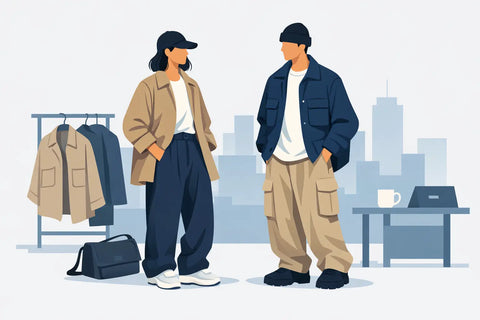
Oversized workwear only looks easy when the proportions are doing real work. A jacket cut with room, a trouser with volume, a shirt that falls away from the body - each piece changes posture, movement, and silhouette. If you are wondering how to wear oversized workwear without looking swallowed by it, the answer is rarely tighter clothes. It is better structure, better fabric, and a clearer sense of line.
Workwear was never meant to cling. Its original logic was practical: ease of movement, layering capacity, durability, and pockets placed where they mattered. The oversized versions that still feel right today keep that logic intact. The difference is intention. Volume should look considered, not accidental.
How to wear oversized workwear starts with silhouette
The first decision is not size. It is shape.
Oversized workwear works best when one silhouette leads and the others support it. If you choose a full worker jacket with dropped shoulders and a boxy body, the trouser beneath it needs either clean width or a quieter taper. If you choose balloon pants or utility trousers with a strong leg shape, the top can still be oversized, but it should have some visual order - a shorter hem, a firmer collar, a placket that keeps the front precise.
This is where many outfits fail. People read oversized as simply bigger. In practice, good oversized clothing is edited. The shoulder may drop, but the sleeve still ends in the right place. The body may be wide, but the hem lands with purpose. The rise may be generous, but the seat and leg shape are controlled.
Think in outline. Box over column. Cropped volume over wider leg. Long shirt under shorter jacket. The eye needs one or two strong ideas, not five.
Fit is not the opposite of oversized
A common mistake is buying up for volume instead of choosing garments designed for it. True oversized workwear has proportion built into the pattern. Armholes are set to move properly. Sleeves account for drape. Pocket scale matches the body of the garment. When a standard fit piece is simply sized up, the details often start to drift. The shoulder gets too broad, the sleeve too long, and the hem too low.
So the question is less "Should I size up?" and more "Was this garment made to carry volume?"
That matters even more in unisex dressing. One garment can work across different bodies, but not in identical ways. A boxy photographer shirt might read sharp and architectural on one person, relaxed and fluid on another. A worker jacket may sit at the high hip on one body and lower on another, changing the whole balance of the look. Neither is wrong. You just need to recognize what the piece is doing on your frame.
If you are new to larger silhouettes, start with one oversized piece that still has a disciplined shape. A chore jacket, a utility shirt, or a tapered balloon pant is usually easier than trying to build a look from two very long, very wide garments at once.
Fabric decides whether volume feels crisp or vague
The same cut behaves differently in cotton herringbone, washed denim, brushed twill, or lightweight poplin. That is why fabric matters so much when learning how to wear oversized workwear.
Heavier cloth gives volume a boundary. It stands away from the body and holds shape through the day. This is what makes a worker jacket feel architectural rather than loose. Midweight denim and dense cotton twill are especially good here. They create structure without stiffness if the garment is cut well.
Softer fabrics can be just as effective, but they read differently. A larger shirt in a lighter cloth moves more, drapes more, and can feel less formal. That can be useful if you want oversized dressing to feel quieter and less engineered. The trade-off is that drape can turn to slouch if the rest of the outfit has no anchor.
When in doubt, pair one fluid piece with one structured one. A washed oversized shirt works better with a trouser that has shape. A roomy canvas jacket works well over a softer tee or jersey base layer. The balance keeps the look deliberate.
Use length carefully
Length is often the detail that separates refined oversized dressing from costume.
A jacket that is too long and too wide can flatten the body. A shirt that extends far below the jacket hem can feel unresolved unless that contrast is clearly intentional. Cropped or slightly shorter outerwear often helps oversized trousers make sense because it lets the rise and leg shape remain visible.
With pants, hem break matters. Full, wide workwear trousers should usually finish cleanly, with either a controlled break or a deliberate crop depending on the shoe. Too much stacking at the ankle makes the volume feel heavy. Too little can make substantial pants look accidental. There is no universal rule here. Boot shape, fabric weight, and rise all affect the result. But the principle stays the same: volume should land cleanly.
Sleeve length deserves the same attention. A small cuff turn can restore proportion fast. It also exposes the wrist, which gives oversized garments a bit of air.
How to wear oversized workwear with layers
Layering is built into workwear, but oversized layering still needs restraint.
Start close, then build out. A compact tee, rib tank, or fine knit under a utility shirt creates a stable base. Add a larger overshirt or worker jacket only if the fabrics can sit over each other without bunching. You want enough room for movement, not so much bulk that every layer fights for space.
The cleanest layered looks usually keep the number of visible elements low. One base layer, one shirt or overshirt, one outer layer. Once every hem, cuff, and collar starts showing at once, the silhouette gets busy. Workwear is functional, but the styling should still feel edited.
Color helps here. Tonal dressing makes oversized shapes look calmer. Ecru, olive, navy, charcoal, faded black, and workwear blue all allow cut and texture to lead. High contrast can work, but it tends to make each layer feel more separate, which can exaggerate bulk.
Shoes anchor the whole system
Oversized workwear asks something of footwear. If the shoes are too slight, the proportions above them can feel top-heavy or unfinished.
That does not mean you need heavy boots every time. It means the shoe should have enough visual presence to hold the trouser line. Plain leather derbies, substantial loafers, canvas sneakers with a firm sole, service boots, or minimal clogs can all work. The shape of the opening matters too. Wider hems often sit better over shoes with a little body.
If your outfit feels off, the problem is sometimes not the jacket or pant. It is the shoe failing to complete the proportion.
Keep the styling spare
Oversized workwear already carries shape, texture, and history. It does not need much added on top.
A cap, a canvas tote, a leather belt, a simple watch - enough. Too many accessories can push the look into performance. The strongest oversized dressing tends to feel lived in rather than styled for effect.
The same goes for distressing and visible references. Heritage matters, but costume does not. A clean worker jacket, generous trouser, and plain knit often say more than a full set of vintage signals layered at once.
The real question is where you want the volume
There is no single formula for how to wear oversized workwear because the right balance depends on your height, frame, and what you want the clothes to communicate. Some people want volume concentrated in the pant, with a shorter jacket and a compact base layer. Others prefer a broad upper half with straighter trousers. Both can work.
What tends to endure is not trend-led exaggeration, but proportion with purpose. Clothes that move well. Fabrics that age well. Shapes that allow different bodies to occupy them differently.
That is the value in oversized workwear when it is done properly. More room, yes. But also more precision. More utility. More life built into the garment.
Start with one piece that has a clear shape. Wear it enough to understand how it falls, where it catches light, how it sits with your shoes, what layers it allows. Then build the rest around that knowledge. The best oversized clothing does not ask you to perform in it. It gives you space, and lets the form do the talking.