
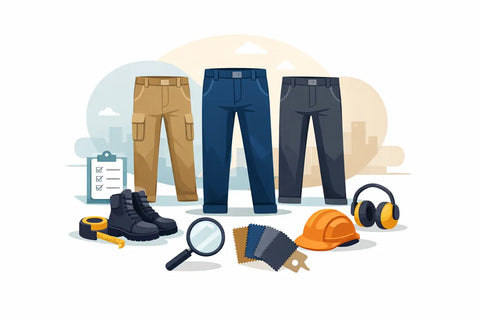
The wrong work pants announce themselves by noon. A waistband that shifts, knees that pull, fabric that bags out after one wear - these are small failures, but they change how a garment lives. A good guide to buying work pants starts there: not with trend, but with use.
Work pants sit at a particular intersection of utility and form. They need to move, hold shape, and keep their relevance long after the season changes. For experienced buyers, that usually means looking past surface styling and reading the garment the way a maker would - through fabric, cut, construction, and how those parts work together over time.
A guide to buying work pants starts with purpose
Not all work pants are built for the same kind of wear. Some are designed around physical utility, with room through the seat and thigh, patch pockets, reinforced stress points, and dense cloth that can take abrasion. Others borrow from that language but refine the silhouette for everyday use - cleaner front, easier drape, less bulk, better range across work, travel, and daily dressing.
That distinction matters. If you want one pair to rotate through studio days, commuting, and weekends, a heavily reinforced utility trouser may feel excessive. If you want structure, durability, and a harder-wearing hand, a softer fashion pant will not age the same way. The best choice depends on whether you need your pants to withstand labor, suggest utility, or do both.
A useful question is simple: what do you ask of the garment five days in a row? Sit, bike, climb stairs, carry tools, travel, layer, wash often. The answer should shape the purchase more than any product name.
Fabric is the first real decision
If the silhouette catches your eye first, the fabric decides whether the pants stay in rotation. Workwear has always been grounded in material logic. Cloth was chosen for abrasion resistance, weather, movement, and lifespan. That still holds.
Cotton twill remains a standard for good reason. It has structure, wears in well, and can feel substantial without stiffness if the weight is balanced properly. A lighter twill is easier for warmer climates and indoor wear. A denser twill gives more shape and tends to hold a line better through the leg.
Canvas has a drier, tougher hand. It often feels more honest, more direct. It can also be less forgiving at first wear, especially in rigid versions. If you like a pant that develops character slowly, canvas makes sense. If comfort on day one matters most, a brushed twill or washed cotton may serve you better.
Ripstop brings another trade-off. It is practical, light, and often durable for its weight, but it reads more technical. That may suit some wardrobes and feel out of place in others. Denim, meanwhile, sits adjacent to work pants rather than fully inside the category, though many buyers treat it the same way. A work trouser in twill or herringbone often offers more versatility if you want a cleaner transition across settings.
Pay attention to fabric weight, but do not chase heaviness as proof of quality. A heavier cloth is not automatically better. The right weight depends on climate, intended use, and silhouette. A balloon pant, for example, needs enough body to hold volume. A straighter utility trouser may benefit from a slightly softer drape.
Fit is less about size and more about balance
Most disappointment in work pants comes from buying the correct size in the wrong fit. Waist measurement alone tells very little. What matters is how the rise, hip, thigh, knee, and hem work as a system.
A higher rise generally gives more comfort in motion and a cleaner line when tucked or layered. It also tends to suit workwear-derived silhouettes because it anchors the garment where it was designed to sit. Mid-rise can feel more familiar for some buyers, but if the seat is shallow or the front rise too short, the pants can become restrictive quickly.
Room in the thigh is another non-negotiable. Work pants should not look strained when standing still. If the upper leg is too narrow, the fabric will pull across the front, the pockets will flare, and the knees will bag in the wrong places. More room does not mean oversized. It means allowing the garment to function.
Leg shape changes the entire feel. Straight leg is the clearest and often the easiest to wear. Tapered leg can sharpen the silhouette, though too much taper can strip away the ease that makes work pants appealing. Wider forms, including balloon and curved legs, offer more volume and movement. When cut well, they feel architectural rather than exaggerated.
This is where experienced buyers usually trust proportion over convention. A unisex work pant may fit very differently across bodies, but the right one still makes sense in motion. One garment. Different bodies. Different lives.
Construction tells you what the garment will become
A work pant does not need decorative complexity. It needs competent construction. Clean topstitching, secure belt loops, well-set pockets, and a fly that lies flat matter more than extra features added for effect.
Look closely at seams under stress. The seat, inseam, pocket corners, and crotch point carry the most strain. Bar tacks or reinforced stitching at these points are useful, but only when placed well. Double-knee panels, tool pockets, and hammer loops are only valuable if you will use them. Otherwise they add weight and visual noise.
Pocket design deserves more attention than it gets. Deep front pockets are practical, but the opening should still sit flat. Rear patch pockets should be placed for balance, not just utility. Side-entry fatigue pockets can be excellent for daily wear because they hold shape and remain accessible while seated.
Hardware matters too. Metal zip fly, tack button, durable snap, clean rivets where needed. None of these should feel oversized or ornamental. Good workwear details have a past. Their value comes from function first.
How to read silhouette in a guide to buying work pants
Silhouette is where utility becomes personal. Two pairs can share fabric and construction yet feel entirely different because of volume and line.
If your wardrobe leans minimal, a straight or slightly tapered utility trouser will likely do the most work. It pairs easily with shirting, knitwear, and outerwear without tipping too literal. If you prefer garments with more shape, a fuller leg or balloon cut can bring a stronger identity while staying grounded in workwear logic.
Cuff opening matters here. A narrow hem creates precision but can limit footwear options. A wider opening works better with boots and chunkier shoes and usually keeps the pant feeling less fussy. Cropped length can sharpen the line, but full length with a slight break often gives work pants the gravity they need.
There is no universal best silhouette. There is only the one that integrates with the rest of your system.
Color should extend wear, not reduce it
Work pants earn their place through repetition. Color affects that more than most buyers admit. Deep navy, washed black, olive, stone, and tobacco tend to remain useful because they pair broadly and age well. They also show wear in a way that can add depth rather than fatigue.
Brighter shades or highly treated finishes may feel specific too quickly. That is not always a problem, but it changes the role of the garment. If you want an anchor piece, stay close to colors with a history in utility dress. They have lasted for a reason.
Surface finish matters just as much. Garment-dyed cloth often develops richer variation over time. Rigid finishes keep a sharper profile at first. Washed finishes soften the entry point but may lose some crispness sooner. Again, it depends on what kind of aging you value.
Buy for the second year, not the first week
The best work pants rarely peak on day one. They need wear. They soften at the points that matter, hold memory in the folds, and begin to reflect your movement. That only happens if the original decisions were sound.
Before buying, imagine the garment after repeated washing and hard use. Will the fabric collapse too much? Will the waistband twist? Will the knees hold shape? Will the color improve or simply fade? Good workwear gets more specific with age, not less useful.
Price belongs in this conversation, but as cost per year, not cost per click. A cheaper pair that loses shape in six months is expensive in the wrong way. A better-made pair that settles in over years usually justifies itself quietly.
At WORKWARE, that idea is simple: buy better. keep forever.
What to check before you commit
Read measurements, not just size labels. Compare them with a pair you already wear often. Check rise, thigh, inseam, and hem width. If product photography is strong, use it to understand where the pant sits on the body and how much volume it carries through the leg.
If care matters to you, note the maintenance early. Some fabrics improve with regular washing. Others benefit from less intervention. Neither is more correct, but the care routine should match your habits.
Most of all, resist buying work pants for the fantasy version of your life. Buy them for your actual week. The right pair should feel resolved before it feels impressive. That is usually how you know they will last.