
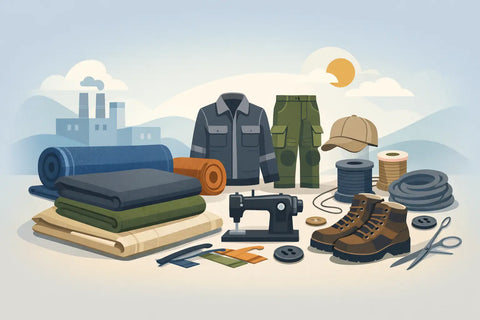
A worker jacket can hold its line for ten years or collapse after one season. The difference is rarely the silhouette alone. It is the cloth: its fiber, weave, weight, finish, and how each of those choices responds to friction, weather, movement, and washing. This guide to utility fabric types looks past surface texture and toward the materials that make a garment worth returning to.
Utility fabric is not one fixed category. It is a way of thinking about cloth. The material needs a job, whether that job is resisting abrasion, carrying tools, keeping out a light rain, regulating temperature, or simply improving through repeated wear. The best choice depends on the garment and the life around it.
What Makes a Fabric Utility-Ready?
A useful fabric does not need to be stiff, technical, or indestructible. It needs to suit the garment's purpose. A heavy canvas makes sense for a chore coat that sees daily friction. The same canvas can feel excessive in a relaxed overshirt intended for warm weather. Weight matters, but so do density, yarn quality, weave structure, and finish.
Look beyond terms such as durable. A dense plain weave generally resists abrasion well. A twill weave drapes more easily and tends to hide dirt. Natural fibers can soften and develop character with use, while synthetics often dry faster and hold their shape more consistently. None is automatically better. The right fabric is the one that wears honestly in its intended setting.
Guide to Utility Fabric Types
Cotton canvas and duck canvas
Canvas is the foundation cloth of utility dressing. Usually made with a plain weave, it is dense, substantial, and direct. Cotton duck is a close relative, woven with tighter yarns for a smoother, more compact surface. Both have long been used for painter pants, market bags, field gear, tents, and worker jackets.
A lighter canvas works well for shirts, fatigues, and unlined outer layers. Midweight and heavyweight versions bring structure to chore coats and utility trousers. The trade-off is break-in. New canvas can feel firm, especially at cuffs, collars, and waistbands, but good cotton canvas gradually becomes more personal. It fades at edges, softens at stress points, and retains a clear shape.
Canvas is not naturally waterproof. A wax treatment can add weather resistance, though it also changes the hand and requires occasional renewal. For everyday use, untreated canvas is often the better choice: breathable, repairable, and easy to live with.
Cotton twill and drill
Twill is identified by its diagonal ribs. That structure gives the cloth a softer hand and more fluid drape than plain-weave canvas, while retaining considerable strength. Chino, drill, and many military trousers are twills. It is a practical middle ground for garments that need to move as easily as they work.
Cotton drill is typically a firm, tightly woven twill with a clean surface. It is especially suited to utility trousers, overshirts, and work jackets where a garment needs enough body without the rigidity of heavy duck canvas. Twill also wears well across seasons. In a medium weight, it can serve as a daily trouser cloth from early fall through spring.
The diagonal weave is forgiving, but it can show shine over time at high-friction areas such as the seat, knees, and pocket edges. That is not a flaw. On well-made trousers, it is evidence of use.
Denim
Denim earns its place through construction rather than nostalgia. Traditional denim uses a twill weave, most often with indigo-dyed warp yarns and undyed weft yarns. This creates the familiar blue face, pale reverse, and high-contrast fade pattern over time.
For utility garments, denim offers abrasion resistance, visual depth, and a reliable degree of structure. Lighter denim is useful for photographer shirts, relaxed work shirts, and warm-weather layers. Heavier denim has the authority for five-pocket pants, work jackets, and pieces designed to take years of wear.
Raw or rigid denim asks more from the wearer. It can be stiff at first and will show creases, fading, and irregularities quickly. Washed denim is easier from day one but usually gives up some of that long, individualized evolution. Choose based on how you wear clothes, not on a rule about authenticity.
Ripstop cotton and cotton blends
Ripstop is a weave construction marked by a visible grid. Reinforcing yarns are placed at regular intervals, helping contain small tears before they spread. Its military and outdoor history is clear, but the fabric works equally well in contemporary utility clothing when restraint is part of the design.
Cotton ripstop has a dry, natural feel and is well suited to field pants, packable overshirts, and lighter utility layers. Cotton-nylon ripstop adds faster drying and better resistance to wind and abrasion. The compromise is character: a synthetic blend may not fade or soften with the same depth as pure cotton.
Ripstop should not be mistaken for invulnerable cloth. Its grid helps manage damage, but a lightweight ripstop can still puncture. Fabric weight and yarn content remain as relevant as the pattern itself.
Herringbone twill
Herringbone twill, often called HBT, reverses the direction of its diagonal weave at regular intervals to form a broken zigzag. The result is a fabric with a distinct surface, strong workwear lineage, and more visual movement than standard twill.
Historically used in military uniforms and fatigue garments, HBT is especially good for overshirts, fatigue pants, and unlined jackets. It feels familiar without becoming costume. A midweight HBT has enough structure for utility, yet its texture keeps a simple garment from feeling flat.
Because the weave is visually pronounced, HBT tends to suit restrained forms. Let the cloth do its work. Simple pockets, practical proportions, and clean construction are usually enough.
Wool and wool blends
Wool belongs in a guide to utility fabric types because function is not limited to cotton. Wool regulates temperature, retains warmth when damp, resists odor, and recovers well after wear. In workwear terms, think of dense melton, wool flannel, or hard-wearing wool twill rather than delicate suiting.
A wool overshirt or lined jacket offers warmth without the bulk of heavily padded outerwear. Wool trousers can be surprisingly capable for travel and daily rotation, particularly in a dense twill. The limitation is care. Wool benefits from less frequent washing, careful storage, and attention to moth protection. It asks for consideration, then returns years of service.
Blends with nylon can improve abrasion resistance. Blends with polyester may make care simpler, though they can reduce the natural hand and breathability that make wool compelling in the first place.
Waxed cotton
Waxed cotton begins as cotton cloth, often canvas or twill, then receives a wax finish that creates resistance to wind and light rain. It has a matte surface, a firm hand, and a record of use built into every crease. A waxed field jacket can look better after weather, travel, and years of handling.
The finish is its strength and its limitation. Waxed cotton is not as breathable as untreated cotton, can feel warm indoors, and should not be washed like ordinary fabric. It needs periodic rewaxing to maintain performance. For a jacket that moves between city weather and weekends outdoors, those demands are part of its appeal. For a daily layer in a hot climate, dry canvas may be more sensible.
Choose by Garment, Not by Label
Start with the role of the piece. For a worker jacket, look for canvas, duck, denim, or heavy twill that can support pockets and hold a deliberate silhouette. For utility trousers, drill, twill, denim, and ripstop offer more movement while remaining substantial. For a shirt jacket or photographer shirt, lighter twill, ripstop, chambray, or soft denim can provide utility without unnecessary weight.
Then consider climate and rotation. One heavy canvas jacket may serve better than three light layers in a cool, dry place. In humid weather, medium-weight cotton twill or ripstop is often more wearable. A fabric that survives anything but stays unworn is not the practical choice.
Construction completes the material. Reinforced pocket corners, bar tacks, felled seams, durable buttons, and properly proportioned facings allow a good fabric to perform. Cloth and construction are a system. One cannot compensate fully for the absence of the other.
Let the Fabric Keep Its Record
Wash cotton when it needs washing, not simply by habit. Close buttons and zippers, turn garments inside out when possible, and avoid excessive heat, which can shrink fibers and dull color. Spot-clean waxed cotton and reproof it when water stops beading. Brush wool, air it between wears, and store it clean.
Utility fabrics are meant to change. Fading denim, softened canvas, polished twill, and creased waxed cotton are not signs that a garment has failed. They are the record of a garment doing its job. Choose the cloth that suits your daily movement, then give it enough time to become yours.