
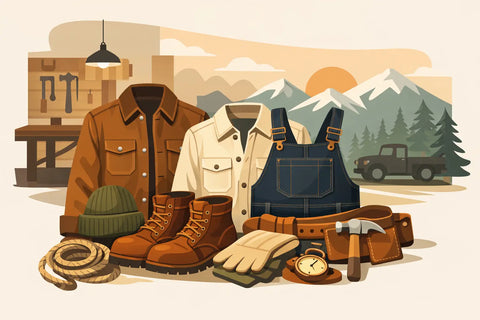
A good worker jacket tells on itself. The twill holds its shape. The pockets sit where the hand expects them. The collar rolls with use, not with styling tricks. That is where any heritage workwear style guide should begin - not with mood boards, but with construction, purpose, and the way a garment earns its place over time.
Heritage workwear has become a broad label, often applied to anything with a canvas shell or a chore coat shape. The real thing is narrower and more useful than that. It comes from garments designed for labor: railroad jackets, utility trousers, fatigue shirts, painter pants, denim built for abrasion, outerwear meant to be worn daily and repaired when needed. What matters now is not costume accuracy. It is understanding the logic behind those forms, then wearing them in a way that feels current, personal, and lived in.
What heritage workwear style gets right
At its best, heritage workwear solves a problem many modern wardrobes create. Too many clothes ask for attention. Too few are built to carry it. Workwear pieces were originally designed around movement, storage, weather, and wear. That gives them a visual clarity that still feels right.
A worker jacket looks good because the proportions are honest. A photographer shirt works because the pockets are integrated, not decorative. Balloon pants and utility trousers hold volume in a controlled way, giving shape without fragility. Even when these garments are refined for daily city wear, their appeal still comes from function.
This is also why heritage workwear crosses easily between wardrobes and bodies. Most of the strongest pieces are not dependent on narrow tailoring or trend-led styling. They sit slightly away from the body, layer well, and improve with repetition. One garment. Different bodies. Different lives.
A heritage workwear style guide starts with fabric
If you want the look without the noise, start with cloth. Fabric determines whether a piece reads as workwear or as an imitation of it.
Dense cotton twill, herringbone, ripstop, drill, chambray, canvas, and substantial denim all carry the right weight. They hold a line. They crease with character. They soften instead of collapsing. Wool overshirts and moleskin can work too, especially in cooler seasons, but they should still retain structure.
Lighter fabrics are not wrong. They simply shift the result. A washed cotton shirt jacket feels easier and more fluid. A heavy duck canvas chore coat feels more architectural. Neither is better in the abstract. It depends on how much shape you want and how hard you expect the garment to work.
Surface matters as much as weight. Heritage garments should age well. That means avoiding finishes that promise a perfect look forever. The better choice is usually a fabric that can mark, fade, and settle into wear without losing integrity. Patina is not damage. It is evidence.
The core pieces worth building around
A small workwear wardrobe is usually stronger than an expansive one. The goal is not variety for its own sake. It is a set of garments that layer cleanly and repeat without fatigue.
The worker jacket
This is the anchor. Look for a straight or slightly boxy cut, practical pockets, and a fabric with enough body to hold shape. Twill, canvas, and denim are the obvious choices. A worker jacket should sit comfortably over a tee, shirt, or light knit without looking oversized for effect.
Navy, ecru, olive, and faded black are dependable because they integrate easily with denim and utility trousers. If you only own one, buy for year-round use rather than peak winter performance.
The utility shirt or photographer shirt
This is where workwear becomes especially useful in modern wardrobes. A well-cut utility shirt functions as both mid-layer and standalone top. It should have enough room for movement, a collar with substance, and pockets that feel built in rather than applied as decoration.
The advantage here is flexibility. Worn open over a tank or tee, it reads casual. Buttoned fully with clean trousers, it becomes sharper. That range is the point.
Utility trousers and balloon pants
Not every heritage trouser needs to be straight-leg denim. Utility trousers bring in a different kind of structure - often higher rise, slightly fuller seat and leg, practical pocketing, and a shape designed for movement. Balloon pants push that idea further, adding volume that narrows toward the hem.
This silhouette is not for everyone, and that is fine. Fuller trousers can feel unfamiliar if your wardrobe is built around slim fits. But they often create better proportion with short jackets and substantial footwear. The trade-off is that they ask for more restraint elsewhere. Keep the upper half simple.
Denim with purpose
Denim belongs in workwear, but not all denim supports the same look. Mid- to high-rise cuts with room through the thigh tend to pair best with utility jackets and overshirts. Raw denim offers a slower, more pronounced wear pattern. Washed denim is easier from day one. Again, it depends.
If you wear denim daily, raw or rigid styles can be satisfying because they record use. If comfort and immediate ease matter more, washed options may get more real wear. The better pair is the one you reach for often.
Fit matters more than nostalgia
Workwear should not feel like costume, and that usually comes down to fit. Vintage reference is useful, but literal reproduction can look stiff in contemporary life.
Aim for ease, not excess. Jackets should allow layering but still show intention. Shirts should skim rather than cling. Trousers should have enough volume to move, with a hem that works with your shoes instead of pooling without purpose.
This is especially true in unisex dressing. A garment does not need to be tailored to read considered. Proportion does the work. Boxy upper layers, fuller trousers, clean hems, and weighty fabrics create a stable outline across different bodies. If one piece feels too broad or too long, balance it elsewhere rather than abandoning the silhouette altogether.
How to style heritage workwear now
The cleanest modern styling is usually the least busy. Heritage workwear already has detail - stitching, pocketing, reinforced seams, washed texture. You do not need to pile on more references.
Start with one clear outer layer, one simple base, and one trouser shape that holds the look. A navy worker jacket over a white jersey tee and faded olive utility trousers is enough. So is a chambray shirt, straight denim, and black leather shoes. The strength comes from proportion and material, not from stacking signifiers.
Footwear can shift the tone quickly. Leather derbies, service boots, canvas sneakers, and simple clogs all work, but each changes the register. Boots lean more literal. Leather shoes sharpen the whole look. Sneakers make it easier and younger. Choose based on context, not on rules.
Color should stay grounded. Ecru, indigo, olive, tobacco, charcoal, faded black, and natural denim all sit well together because they share a certain honesty. Bright color is possible, but it works best as a controlled interruption rather than the foundation.
What to avoid in a heritage workwear style guide
The easiest mistake is overcommitting. Too much selvedge, too many references, too many visibly vintage cues, and the result starts to feel performative. Heritage workwear is strongest when one or two garments carry the language and the rest stay quiet.
The second mistake is buying stiffness instead of longevity. Heavy fabric alone does not make a garment better. If the cut is awkward, the collar sits poorly, or the pockets are ornamental, no amount of thickness will fix it.
The third is treating workwear as a men’s category with optional adaptations. Some of the best contemporary workwear is unisex in spirit and in practice. The appeal is not macho nostalgia. It is utility, proportion, and durability.
Buy less, wear harder
The most convincing workwear wardrobes are built slowly. One jacket worn three years will usually look better than three jackets worn three times each. Repetition is not a failure of style. It is the whole premise.
Buy the garment that works across seasons, across outfits, across versions of your week. Pay attention to fabric, pocket placement, rise, and the way a piece sits when you move. Details with a past. Forms for now.
A heritage workwear style guide is useful only if it leads to better wearing, not more buying. Start with one honest piece. Let it prove itself.