
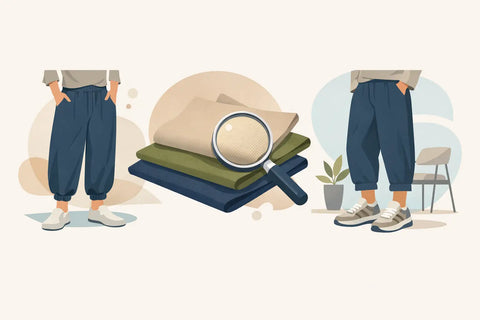
The difference shows up in motion. A pair can look convincing on a hanger - wide through the thigh, tapered at the hem, slightly cropped - then fall apart once you wear it for a full day. That is where any honest balloon pants review should begin: not with novelty, but with shape under use.
Balloon pants have been flattened by trend coverage into one idea: volume. That misses the point. The best versions are not simply oversized trousers with a narrowed leg. They are controlled. Room where the body bends. structure where the silhouette needs direction. When the pattern is right, balloon pants feel easy without looking slack. When it is wrong, they read costume quickly.
Balloon pants review: what matters first
For experienced buyers, the appeal is clear. Balloon pants offer ease through the seat and thigh, visual shape from hip to hem, and a cleaner answer to wide-leg trousers when you want volume with definition. They borrow from workwear, military dress, and utilitarian pattern cutting, but the strongest pairs are refined enough for daily wear, not reenactment.
The cut works because it solves a practical problem. Straight pants can bind when you sit, cycle, or move through a long day. Wide-leg pants create comfort, but they often lose structure and drag visually. Balloon pants sit between those extremes. The leg opens where mobility matters, then narrows so the pant still feels intentional.
That balance is fragile. A good pair needs three things working together: a disciplined rise, enough shape through the outer leg, and a taper that finishes cleanly without pinching. Miss one, and the whole silhouette becomes either too inflated or too ordinary.
Fit is the real test
Most balloon pants succeed or fail at the hip line. If the volume begins too low, the shape looks heavy and the leg feels disconnected from the waist. If it begins too high, the pant can become rounded in a way that feels theatrical. The best examples build shape gradually from the top block, with enough room in the seat to move and enough control through the waist to keep the line stable.
Rise matters more than many product descriptions admit. A high or medium-high rise usually gives balloon pants their clearest proportion because it anchors the fullness and lets the taper read properly. Lower rises can work, but they often shorten the line and make the volume feel accidental. For most bodies, especially if you wear shirts tucked or short outer layers, a higher rise gives the silhouette its architecture.
Length is another point buyers should watch closely. Slightly cropped balloon pants tend to look sharper because the hem finishes above the shoe rather than collapsing onto it. Full-length versions can be excellent, especially in colder months, but only if the taper is firm enough to prevent pooling. Too much break and the shape loses precision.
This is also where body type conversations become more useful when they move past rules. Balloon pants are often described as difficult to wear. That is overstated. They can work across a wide range of bodies because the cut creates its own proportion. What changes is styling. Broader shoulders can handle more volume below. Smaller frames often do better with a cleaner top block and a shorter hem. None of this is fixed. It depends on how much shape you want the pant to carry.
Fabric decides whether the shape holds
A balloon silhouette lives or dies by cloth. Lightweight fabric can make the pants feel soft and casual, but it rarely gives enough body to hold the curve of the leg. Heavier fabric creates a better line, though too much stiffness can make the pant feel rigid instead of natural.
Midweight cotton twill is often the sweet spot. It has enough density to support the form, enough breathability for daily wear, and enough resilience to improve with use. Herringbone twill, brushed cotton, and dense canvas can also work well, depending on season and finish. Denim brings structure, but it changes the mood of the garment. It becomes more assertive, less quiet.
Linen blends are trickier. They can produce beautiful volume at first wear, especially in warmer weather, but they wrinkle fast and the silhouette softens throughout the day. That is not a flaw if you want a looser, more relaxed expression. It is a trade-off. Buyers looking for a cleaner line should lean toward compact cottons or brushed utility fabrics instead.
Texture matters almost as much as weight. Smooth fabric can make balloon pants feel modern and pared back. Visible twill lines, slub texture, and washed surfaces pull the garment closer to its workwear roots. Neither is better. The choice depends on whether you want the shape to feel architectural or lived-in.
Construction details worth noticing
A proper balloon pants review should spend time on the parts that are easy to miss online. Pattern shape is only half the story. Construction determines whether the pant keeps its line after months of wear.
Start with the waistband. It should feel secure without overbuilding. If there is elastic, it needs to be integrated cleanly so the waist still sits flat. If there are pleats or darts, they should support the volume rather than create bulk. Well-placed front pleats can give the pant a calm, dimensional fall. Poorly set pleats can make the top block balloon outward in the wrong place.
Pocket placement affects the silhouette more than buyers expect. Side seam pockets tend to preserve a cleaner line. Patch or fatigue-style pockets can reinforce utility character, but they also add visual weight at the hip. On some bodies, that is welcome. On others, it can widen the shape more than intended.
Then there is the hem. A narrow hem opening is what gives balloon pants their character, but it should not grip the calf or stack awkwardly over footwear. The finish needs enough room to sit naturally with a sneaker, a derby, a service boot, or a flat sandal. The best pairs adapt. They do not demand one shoe.
This is where brands with a real understanding of utility clothing tend to stand apart. The garment should be built to move, wash, soften, and keep its outline. That is harder than making a dramatic shape for one season of images.
How balloon pants wear in real wardrobes
The strongest argument for balloon pants is versatility. Not trend versatility - actual wardrobe utility. They work with short jackets, boxy shirts, knit polos, cropped sweatshirts, and long coats because the taper keeps the silhouette controlled. They can read studio, office, travel, or weekend depending on fabric and styling.
They are especially useful in wardrobes built around proportion rather than decoration. If you prefer clean layers and substantial basics, balloon pants add shape without demanding graphic noise or complicated styling. A plain tee and worker jacket become more considered when the trouser line has intent.
That said, they are not universal. If your wardrobe depends on long, slim tops or very formal tailoring, balloon pants may feel out of system. They also ask for some confidence in proportion. Not theatrical confidence. Just the willingness to let a pant have presence.
For travel and long wear, they can be excellent. The ease through the seat and thigh is practical. Movement feels natural. The taper keeps the hem out of the way. In cooler months, they layer well with dense socks and heavier footwear. In warmer weather, success depends almost entirely on fabric choice.
Who should buy them, and who should pass
If you value shape, comfort, and garments that do more than one thing, balloon pants are easy to justify. They suit buyers who notice pattern cutting, who want utility without bluntness, and who build wardrobes around a few reliable silhouettes rather than constant replacement. A well-made pair can become routine quickly - the pants you reach for when straight legs feel too rigid and wide legs feel unresolved.
If you prefer your trousers invisible, you may not get enough from them. Balloon pants are subtle in the right version, but they are never neutral. The silhouette always says something. Some buyers want exactly that. Others want a trouser that disappears beneath the rest of the look.
Price should be judged against wear and fabric, not shape alone. The silhouette can be copied cheaply. What usually disappears at lower price points is fabric quality, top-block control, and long-term recovery after washing. A strong pair earns its keep because the line stays intact and the cloth gets better with time.
A final note for anyone considering a first pair: buy for proportion, not trend appetite. Choose a fabric with body. Watch the rise. Pay attention to hem width. If the pattern is disciplined, balloon pants will not feel like a seasonal experiment. They will feel like a better tool - one garment, different bodies, different lives.