
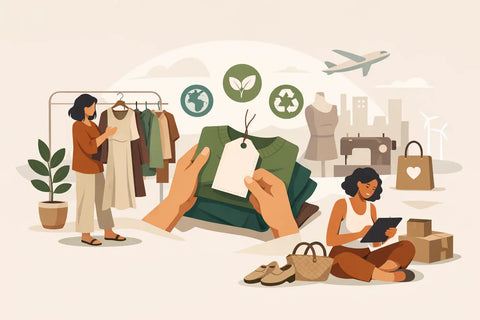
A shopper pauses over a jacket and asks the right question: not what is new, but what will still make sense in five years. That shift sits at the center of slow fashion consumer trends. The change is not aesthetic alone. It is structural. Buyers are moving away from novelty and toward clothes that hold their shape, earn repeat wear, and fit into a longer wardrobe life.
For experienced apparel buyers, this is less a moral awakening than a standards reset. Fast fashion trained the market to expect constant replacement. Slow fashion asks better of both maker and wearer. Fabric weight matters again. Seam construction matters. So does a silhouette that can live across seasons, jobs, and changing personal style.
What slow fashion consumer trends are actually showing
The clearest pattern is restraint. Consumers are not necessarily buying less clothing in every case. They are buying with a narrower filter. The piece has to justify its place. That usually means durability, versatility, repair potential, and some resistance to trend dating.
This is why utility wear, heritage forms, and seasonless staples continue to hold attention. A worker jacket, a substantial overshirt, a well-cut trouser - these categories offer use value beyond a single season. They also age well, which matters to a buyer who sees wear not as damage alone, but as evidence of life.
Another trend is literacy. Shoppers are more fluent in clothing than they were a decade ago. They ask about cotton density, denim character, garment wash, hardware, and how a piece is finished on the inside. They compare construction, not just mood boards. They know that two garments can look similar on screen and behave very differently after twenty wears and three washes.
That said, the market is not pure. Plenty of consumers still want the language of slow fashion without its full discipline. They may want natural fibers, but at a low price. They may want durability, but also the rush of frequent newness. This tension is real. It shapes what brands can credibly offer.
Fewer purchases, higher expectations
One of the strongest slow fashion consumer trends is not simply buying fewer items. It is expecting more from each one. A shirt should work layered and alone. A trouser should carry across weekdays and weekends. A jacket should feel substantial enough to anchor a wardrobe, not just fill a gap.
This changes how people evaluate value. Price still matters, but cost per wear has become a more practical measure than ticket price alone. An expensive garment that keeps its shape and relevance for years can make more sense than three cheaper versions that collapse after one season. Buyers are doing that math more often.
There is also a sharper eye on hidden costs. Time spent replacing weak garments. Frustration over fabric failure. Closet fatigue caused by too many compromised purchases. Slow fashion does not erase cost. It redistributes it toward better materials, better make, and better use.
For brands, this means design cannot rely on surface impact alone. Product pages, imagery, and copy can attract attention, but retention comes from performance. The first wear sells the promise. The fifteenth wear confirms it.
Why versatility matters more than novelty
Versatility has become a form of luxury. Not because it is flashy, but because it simplifies. The modern buyer often wants fewer decisions, fewer weak links, fewer garments that only work in one setting. Pieces that move easily across contexts feel more valuable than clothes built for a single moment.
This is especially visible in unisex and relaxed silhouettes. Broader fits, adjustable shapes, and workwear-derived forms allow one garment to live across different bodies and uses. The appeal is practical before it is ideological. A good balloon pant, utility trouser, or boxy shirt offers room, function, and longevity in a way a more trend-specific cut often cannot.
Still, versatility has limits. If a garment tries to do everything, it can lose character. The best pieces solve this with clarity. They have a strong point of view, but not a narrow one. They feel designed, not generic. That distinction matters. Slow fashion is not bland fashion.
Material trust is replacing trend trust
For years, many consumers followed trend signals to decide what to buy. Now a growing segment follows material signals instead. They trust dense cotton twill, sturdy poplin, dry-hand denim, wool with structure, and trims that feel made to last. The garment earns confidence through substance.
This is partly a reaction to disappointment. Thin fabric, unstable sizing, and short-lived finishes have made shoppers more skeptical. They do not want to be sold a mood. They want evidence. Weight, handfeel, recovery, stitching, pocket construction, and wash behavior have become part of the buying conversation.
Natural fibers continue to benefit from this shift, though not automatically. A poorly made cotton garment is still a poor garment. Synthetic blends are not always disqualified either, especially when function requires them. The issue is not purity for its own sake. It is whether the material choice serves longevity, comfort, and use.
Brands that speak clearly about fabrication, construction, and intended wear tend to build stronger trust. Not because transparency is a slogan, but because informed buyers can tell when the details line up.
The resale and repair effect
Slow fashion consumer trends are also shaped by what happens after purchase. Resale markets, mending culture, and garment care education have all changed how people think about ownership. Clothing is being judged less as a disposable item and more as an asset with a lifespan.
This does not mean every customer repairs clothing. Many do not. But the idea that a garment should be repairable has value on its own. Reinforced seams, replaceable buttons, durable hardware, and fabrics that can withstand repeated wear all support the sense that the piece was built with time in mind.
Resale adds another layer. Buyers know some garments retain desirability because the design stays relevant and the make holds up. That possibility can justify a higher upfront investment. It also pushes brands toward cleaner silhouettes and stronger construction, since garments that age badly have little second life.
There is a caution here. Resale value alone should not be the reason to buy. The healthiest slow fashion mindset is still rooted in use. Wear it hard. Keep it in rotation. Let patina and memory do their work.
Values matter, but proof matters more
Many consumers care about labor standards, sourcing, and environmental impact. That concern is real. But in practice, the most durable loyalty tends to form when values are matched by product integrity. If a brand speaks about responsibility while making forgettable clothes, customers notice the gap.
The stronger position is simple: make garments worth keeping, then explain how they are made. That is part of why workwear-informed brands continue to resonate. Utility, durability, and honest construction already align with a slower model of consumption. The values are visible in the product.
For a brand like WORKWARE, the phrase buy better. keep forever. works because it is not abstract. It points to a standard. A garment should earn long life through cut, material, and use.
What brands should read from this shift
Consumers are not asking every brand to become austere or heritage-driven. They are asking for fewer compromises. They want clothes with purpose. They want product language that respects their intelligence. They want design that can survive past the season it launched.
That leaves room for different expressions. Some buyers want strict minimalism. Others want character, volume, texture, or historical reference. Slow fashion is not one look. It is a different relationship to time.
The brands that will hold attention are the ones that understand this. They will design less reactively. They will edit harder. They will show why a garment exists, how it wears, and what makes it worth keeping. Not every customer will choose that path. Some will always prefer speed, novelty, and lower entry prices. Fair enough.
But the direction is clear. The strongest wardrobes are being built with intent. One useful jacket. One dependable trouser. One shirt that only gets better after wear. That is where demand is deepening. And that is where clothing starts to matter again.
The next good purchase should feel calm. Not because it is basic, but because it has already proved its case.