
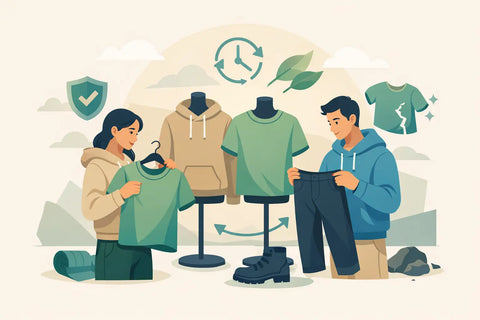
A useful unisex clothing review begins after the first impression. Not with whether a garment reads masculine or feminine, but with how it behaves: across different bodies, through a full day, after repeated washing, and alongside the rest of a considered wardrobe.
The category is often reduced to oversized basics and neutral colors. That is too narrow. Good unisex clothing is a design discipline. It asks more of proportion, fabric, fastening, pocket placement, and ease. When those decisions are right, one garment can find a place in different lives without losing its character.
What Makes Unisex Clothing Worth Buying
Unisex does not mean shapeless. Nor does it mean one standard body with a broader size range attached. The strongest pieces establish a clear silhouette, then leave room for the wearer to make it their own.
A worker jacket, for example, should hold enough structure at the shoulder to keep its form. Its body needs enough ease for a knit or overshirt beneath it. The sleeves should still work when rolled. A utility trouser needs room through the seat and thigh, a leg shape that feels deliberate rather than generic, and pockets placed for use rather than decoration.
These are small decisions, but they determine whether a garment is genuinely shared or merely marketed that way. One garment. Different bodies. Different lives.
The trade-off is real. A unisex cut will not replicate the highly shaped waist, narrow shoulder, or close seat of traditional gendered tailoring. That is not a failure when the garment is designed around ease and balance from the start. It is a reason to buy with intention. Choose the silhouette you want, not the label you expect it to replace.
Unisex Clothing Review: Start With the Fabric
Fabric is usually the first honest signal of value. It carries the garment's weight, drape, recovery, and eventual character. A well-cut piece in a thin, unstable cloth rarely improves with time. A substantial cloth can make a simple form feel settled from the first wear.
For shirts, look for cotton with enough density to resist becoming translucent or collapsing at the collar. Poplin is crisp and light. Oxford cloth has more texture and softness. Twill brings structure and a workwear reference. None is automatically better. The right choice depends on the role the shirt needs to play.
For jackets and pants, cotton twill, canvas, denim, and textured wool blends tend to offer the most useful balance of durability and visual depth. They hold a silhouette without requiring constant adjustment. They also age visibly, which matters. Fading at a cuff, a softened crease at the knee, and a broken-in collar can make a garment more personal rather than more tired.
Weight needs context. Heavy fabric is not always a mark of quality. An overly rigid canvas can feel restrictive in a shirt or uncomfortably warm indoors. Conversely, lightweight fabric can be excellent when it is tightly woven and properly finished. Check whether the material suits the garment, the climate, and how often you expect to wear it.
Natural fibers are not a moral shortcut either. Cotton can be hard-wearing or flimsy. Wool can be resilient or delicate. Synthetics can add practical recovery and abrasion resistance, especially in outerwear. The question is whether the composition serves the construction. Good clothing has a reason for what it is made from.
Fit Is About Proportion, Not Category
The most common mistake in buying unisex clothing is relying on a familiar size alone. A medium means little without measurements. Shoulder width, chest width, rise, inseam, sleeve length, and hem opening tell the more useful story.
Start with a garment you already wear often. Measure it flat, then compare those dimensions with the piece you are considering. For a jacket, focus on shoulder, chest, sleeve, and body length. For pants, study waist, front rise, thigh, inseam, and leg opening. This takes minutes and prevents most fit disappointments.
Then consider how the garment is intended to sit. A photographer shirt can look right with a generous body and dropped shoulder. A worker jacket often needs enough room for layering, but not so much that the collar falls away from the neck. Balloon pants require volume through the leg, balanced by a considered taper or cropped length. Their shape is the point. Sizing down until they resemble standard chinos misses the design entirely.
Height changes the reading of every proportion. On a shorter wearer, a long jacket or full break at the hem can overwhelm the frame. On a taller wearer, cropped proportions may become more pronounced. This is where hemming, cuffing, and sleeve rolling are not corrections. They are part of wearing the garment well.
Construction Shows Up in Repeat Wear
A garment does not need theatrical detailing to be well made. Often, the evidence is quiet: clean topstitching, reinforced stress points, a collar that retains its shape, buttons that do not loosen, and pockets that sit flat after use.
Look closely at the areas that take the most strain. Pocket corners, crotch seams, sleeve joins, belt loops, plackets, and buttonholes deserve attention. Reinforcement is especially relevant in utility-inspired clothing because the visual language promises function. If a large patch pocket pulls at the body after a few wears, it is only borrowing the look of workwear.
Finishing matters, though it should be judged in proportion to the garment. Flat-felled seams and sturdy bar tacks make sense in shirts and trousers intended for frequent use. Bound seams can reduce bulk in unlined jackets. Durable hardware is useful where hardware is needed, but excessive snaps and zips can turn a straightforward garment into a costume.
Care instructions also belong in any serious review. A piece that requires dry cleaning may still be worthwhile, especially in tailored wool. But daily wardrobe foundations benefit from care that matches real life. Washable, repairable, and easy to store is a strong combination.
The Test Is Versatility Without Sameness
Seasonless dressing does not mean every piece must work everywhere. It means a garment should have more than one credible use. A good overshirt can sit under a coat in winter, replace a light jacket in spring, and add structure to a T-shirt in summer. Utility trousers can work with leather shoes, canvas sneakers, or a worn-in boot because their form is stable enough to carry different combinations.
This does not require a closet built entirely in black, navy, and ecru. Those colors are useful because they combine easily, but texture and proportion create more lasting interest than color restraint alone. A faded indigo shirt, dense olive twill, or natural denim can become a recurring anchor without becoming a uniform.
At WORKWARE, the aim is not to make clothing anonymous. It is to make it returnable. The piece should be recognizable, useful, and capable of settling into your own system over years of wear.
When Unisex Clothing Does Not Work
Not every garment benefits from a shared silhouette. Highly tailored blazers, close-cut formal trousers, and fitted dresses often depend on specific shaping to perform their best. A unisex version may offer freedom, but it can also lose the precision that makes the original form compelling.
There is also a difference between intentional volume and excess fabric. If the shoulders drift too far, the sleeves cover the hands, and the body has no structure, the garment may look unfinished rather than relaxed. Better unisex design creates room with control.
Avoid buying a piece solely because it promises versatility. The most enduring garments still need to suit your habits. If you carry a camera, notebooks, tools, or a phone throughout the day, utility pockets may earn their place. If you work in a formal office, a heavyweight chore coat may remain a weekend piece. Both outcomes are valid. The useful wardrobe is the one that reflects how you actually move.
A considered purchase has a simple measure: can you name at least three ways you will wear it, and can you imagine reaching for it next year? If the answer is yes, let the garment earn its history. Buy better. Keep forever.