
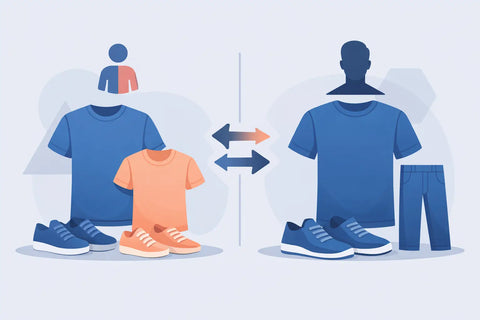
A medium is not a universal measurement. In unisex sizing vs mens sizing, the label may look familiar, but the garment’s underlying proportions, intended ease, and grading tell the real story. This matters most with workwear-derived pieces: a worker jacket needs room through the shoulder and sleeve; a utility trouser needs movement through the seat and thigh. The right size is less about what you usually buy and more about how the garment was designed to sit on your body.
Unisex clothing is not simply men’s clothing offered to everyone. At its best, it is a separate fit system built around shared function, deliberate volume, and a silhouette that can adapt across bodies. At its least considered, it can be a relabeled men’s block. Knowing the difference makes online sizing far less speculative.
What unisex sizing is designed to do
Unisex sizing begins with a pattern block intended to work beyond a single traditional gendered category. That does not mean it erases shape. It means the designer chooses where to create flexibility: more ease through the body, an adjustable waist, a dropped shoulder, a straighter leg, or a sleeve designed to roll cleanly.
The goal is a garment with room to be interpreted. One person may wear a photographer shirt close to the body; another may size up and use it as an overshirt. A pair of balloon pants may sit at the natural waist on one wearer and lower on the hip on another, changing the break, volume, and overall line without changing the garment.
This approach has roots in uniform and work clothing. Chore coats, field shirts, fatigues, and coveralls were made to accommodate motion, layers, and repeated use. Their logic was functional before it was fashionable. Contemporary unisex clothing can retain that logic while refining the proportion.
A well-made unisex fit often favors balance over contour. Expect a more relaxed chest, a shoulder that may sit slightly wider or lower, and trousers with practical room through the upper leg. Those decisions are intentional. They allow the garment to work across different bodies and different ways of wearing it.
How men’s sizing usually differs
Men’s sizing traditionally uses a block built around a different set of average body proportions. In tops, that commonly means more width across the shoulder and upper chest, a straighter line from chest to hem, and longer sleeves and body length. In pants, it often means less waist-to-hip differential, a different rise, and a longer inseam at comparable labeled sizes.
That does not make men’s sizing less versatile. Many people prefer it precisely because of its clearer shoulder structure, longer proportions, and straighter silhouette. Vintage workwear was often cut this way, and those original proportions remain useful references for contemporary garments.
The limitation is the label itself. A men’s small and a unisex small do not share a fixed standard. One unisex small may be built from a men’s-inspired block with adjusted length. Another may be a genuinely neutral pattern with a different shoulder angle, sleeve opening, and waist placement. Brand to brand, the letter on the tag is only a starting point.
Unisex sizing vs men’s sizing: the points that matter
The most visible difference is often length. Men’s garments tend to run longer through the sleeve, torso, and inseam. Unisex garments may shorten one or more of those dimensions to keep the piece balanced across a broader range of heights. But this is not a rule. Oversized unisex outerwear may be intentionally long, while a cropped worker jacket may be cut short for everyone.
Shoulders are equally revealing. A traditional men’s shirt can have a more defined shoulder width and a higher armhole shaped for that block. A unisex shirt may use a dropped shoulder, a squarer body, or extra room at the armhole. The latter can feel easier to wear, particularly with layers, but it may look too broad if you prefer a clean shoulder line.
Then there is ease. Ease is the difference between your body measurement and the garment measurement. It is where a fit becomes a silhouette. A unisex overshirt with several inches of chest ease is meant to sit away from the body. Choosing your usual men’s size without checking the garment measurements can produce more volume than you intended. Conversely, sizing down may reduce width but leave the sleeve and shoulder relationship feeling wrong.
Pants require their own reading. In men’s sizing, a waist number can suggest a direct body measurement, though vanity sizing makes even that unreliable. Unisex pants may use alpha sizing, elastic, drawcords, side adjusters, or a broader grade between sizes. The waist may be flexible, while the hip, rise, and thigh remain the defining measurements. For utility trousers and balloon silhouettes, those areas determine comfort and shape more than the waist label alone.
Read the measurements, not the category
The most dependable way to buy unisex clothing is to compare it with a garment you already wear often. Lay that garment flat and measure it carefully. For tops and jackets, start with pit-to-pit width, shoulder width, sleeve length, and back length. For pants, check the waist laid flat, rise, thigh, leg opening, and inseam.
Compare those figures with the garment’s stated measurements, not only a generic body-size chart. A body chart tells you which size the brand expects you to begin with. Garment measurements tell you what will arrive.
For a shirt or jacket, double the pit-to-pit measurement to understand the approximate chest circumference. Then consider the intended ease. If your favorite jacket measures 23 inches across the chest and the new piece measures 25, that additional four inches around the body may be exactly right for layering. Or it may be more volume than you want. The number is neutral. The silhouette is the decision.
With pants, measure the rise before assuming a waist size will translate. A higher rise sits at a different point on the body than a low rise. A 32-inch waist can feel entirely different depending on where it is designed to sit, how much room it has through the seat, and whether the waistband adjusts. A relaxed thigh is useful for movement, but it also changes the visual weight of the leg.
Choose for the garment’s job
A fitted dress shirt, a denim chore coat, and an elastic-waist utility pant should not be sized with the same expectation. The garment’s job sets the fit.
For outerwear, leave enough space for the layers you actually wear. A worker jacket worn over a tee can take a cleaner fit; the same jacket used over knitwear needs room through the chest and armhole. Check whether the shoulder seam lands where you want it. This is difficult to alter well and has an outsized effect on the entire garment.
For shirts, decide whether you want a base layer or an overshirt. A unisex button-up can look precise at the smaller end of the size range and relaxed one size up. Neither is more correct. The collar, hem length, and sleeve proportion should guide the choice.
For trousers, start with the waist and rise, then let the leg shape do its work. Do not size down automatically to make a fuller cut look slimmer. You may lose the ease that gives the pattern its intended movement. If a tapered utility trouser feels too large at the waist but right through the thigh, an adjustable waistband or a simple alteration may preserve the better overall proportion.
When sizing down works, and when it does not
Sizing down can be useful when a garment is deliberately generous through the body and you want less volume. It is common with boxy tees, overshirts, and relaxed jackets. Still, look at the full measurement set. A smaller size can solve chest width while creating short sleeves, a tight armhole, or a hem that no longer layers well.
Sizing up has its place too. It can give a chore coat the room of a true layer, make a shirt function as light outerwear, or preserve the intended drape of a wider trouser. The trade-off is proportion. Extra width is usually manageable; excessively long sleeves or a shoulder seam falling far down the arm can make the garment feel borrowed rather than considered.
There is no hierarchy between a closer fit and an oversized one. There is only whether the proportions support how you move, layer, and return to the piece. Clothing built for years of wear should leave room for real life.
A size label is a reference point. Measurements are evidence. Start with the garment you reach for without thinking, compare its dimensions, and choose the version that gives you the same sense of use. One garment. Different bodies. Different lives.