
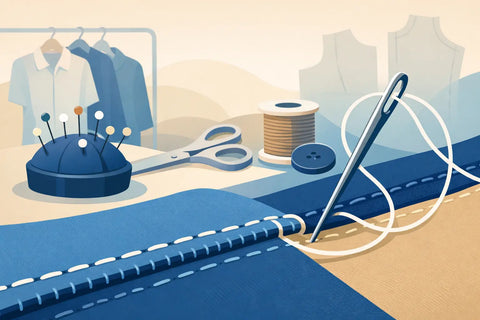
A collar that holds its line after repeated washing. A pocket that does not pull away at the corners. Denim that softens without thinning into weakness. These are not accidents. When people ask, “why do clothes last longer?” the answer is rarely one premium detail. It is a system of decisions, made before the garment reaches a wardrobe.
Longevity is not the same as stiffness, heaviness, or a high price tag. A garment can feel substantial on a hanger and still fail where it matters: at a stressed seam, along a pocket edge, or after a few hard washes. The pieces worth keeping balance material, construction, fit, and care. They are built for movement, repetition, and a life beyond the first season.
Why Do Clothes Last Longer? Material Has a Memory
Fabric is the first decision, but fabric composition alone does not tell the whole story. A 100% cotton shirt can be airy and short-lived, or dense enough to develop character over years. The difference lies in fiber quality, yarn, weave, weight, and finishing.
Long-staple cotton fibers generally create smoother, stronger yarns with fewer loose ends. Tightly woven poplin, twill, canvas, and denim resist abrasion differently, each with its own hand and purpose. A worker jacket benefits from a firm twill or canvas that can take friction at the elbow and shoulder. A photographer shirt may call for a lighter fabric, provided its weave remains stable and the construction supports it.
Weight helps, but only when it serves the garment. Heavy fabric is not automatically durable if the yarns are weak or the finishing makes the cloth brittle. Conversely, a lighter cloth can last well when it is tightly constructed, properly stabilized, and worn within its intended use. The question is not simply, “How heavy is it?” It is, “What is this fabric meant to do?”
Natural fibers also change in ways synthetics often do not. Cotton fades, linen relaxes, wool develops softness. These are not always signs of decline. Well-chosen cloth records wear without losing function. The surface becomes personal while the structure remains sound.
Construction Carries the Load
A garment is only as durable as its points of tension. Seams, bar tacks, hems, closures, pocket corners, and button attachments do quiet work every time you sit, reach, carry, and wash.
Look closely at a workwear-derived piece. Flat-felled seams, often used in shirts and denim, enclose raw edges and create a strong, clean finish. Double-needle stitching distributes strain across two rows rather than one. Reinforced pocket openings and bar tacks secure small areas that receive disproportionate force. These details are practical, not decorative. They come from garments designed for labor, where repair was preferable to replacement.
That does not mean every garment needs every reinforcement. Too much stitching can make a soft shirt bulky. Heavy hardware can distort a lighter cloth. Good construction is proportional. The method should match the fabric, silhouette, and expected use.
Buttons deserve attention as well. A button sewn on with a firm shank has room to move as the fabric flexes, reducing strain at the attachment point. A well-set zipper should lie flat without catching the surrounding cloth. Rivets, when used with purpose, protect high-stress areas. When used only as styling, they add weight without adding much life.
Inside finishes reveal the maker’s priorities. Loose threads are not always a verdict on quality, but uneven seam allowances, poorly finished raw edges, and skipped reinforcement often predict where trouble will begin. Turn a garment inside out. The interior should feel as considered as the exterior.
Fit Prevents Premature Wear
A garment can be impeccably made and still wear out early if the fit fights the body. Tightness creates constant tension at the seat, thighs, elbows, armholes, and button placket. Fabric stretches, seams pull, and recovery weakens. The first failure may look sudden, but it usually began with repeated strain.
Ease is functional space. It allows a jacket to reach forward, trousers to sit and climb stairs, and a shirt to layer without pulling across the back. This is one reason workwear silhouettes have endured. A slightly fuller cut is not just a visual reference. It gives the garment room to work.
The right fit depends on the cloth. Rigid denim will ease with wear but may initially need more consideration through the hip and thigh. A loose, open-weave linen can catch and abrade if it is excessively oversized. Oversizing is not a universal answer. Balance matters.
Fit also shapes how often a garment is worn. A piece that works across weather, settings, and bodies earns more use. A worker jacket over a T-shirt, knit, or shirt. Balloon pants with a cropped jacket or long coat. One garment, different bodies, different lives. Versatility is part of longevity because relevance keeps a piece out of storage.
Care Is Part of the Design
Even the best-built clothing can be shortened by unnecessary washing, high heat, and careless storage. Care is not preciousness. It is basic maintenance.
Wash when the garment needs washing, not by habit. Airing out a jacket, brushing off dry soil, or spot-cleaning a small mark can extend the time between full washes. For cotton and denim, turning garments inside out reduces surface friction and helps preserve color. Cold or cool water is usually gentler on fibers and reduces shrinkage risk. Use a moderate spin cycle, then reshape and air-dry when possible.
Heat is efficient, but it is hard on elastic fibers, prints, finishes, and shrink-prone natural fabrics. A dryer may be useful for a brief softening cycle or when the care label allows it, yet repeated high heat accelerates wear. The trade-off is simple: convenience now, less life later.
Storage matters more than it seems. Heavy knits should be folded rather than hung so their shoulders do not stretch. Jackets need hangers that support their shape. Clean garments before long storage, especially wool or natural-fiber pieces that can attract pests. Keep them dry and out of prolonged direct sun, which can fade color and weaken fibers over time.
Repair Keeps the Original Intent Intact
The longest-lasting garment is often the one repaired early. A loose button takes minutes to secure. A worn hem can be restitched before it frays upward. A small hole can be patched or darned while it is still small.
Repair does not need to be invisible. Visible mending can suit indigo denim, canvas trousers, and well-worn overshirts, especially when it follows the garment’s material logic. But subtle repair has its place too. The goal is not a performance of wear. It is continued use.
There is a limit. When fabric has become uniformly thin, a repair may only move stress to the next weak point. When a zipper replacement costs more than the garment’s remaining life justifies, letting go can be reasonable. Keeping clothing forever is not the standard. Buying with enough care that repair is worthwhile is.
A Better Test Before You Buy
Before choosing a new piece, handle it with the future in mind. Feel the cloth, then inspect the seams. Pull gently at the pockets and button placket. Consider where it will rub, fold, and carry weight. Ask whether the fit allows your ordinary movement, not only a good mirror moment.
Also ask whether you will want it in three years. Not because it is neutral or safe, but because its shape has a reason. A garment with a clear silhouette, useful pockets, dependable cloth, and enough ease does not need novelty to stay interesting. It changes with wear.
Clothes last longer when they are designed for the body, chosen for a real life, and cared for without ceremony. The best pieces do not remain untouched. They become better evidence of use.