
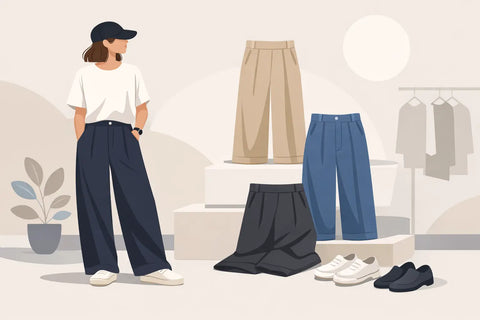
Boyish wide pants are not defined by who wears them. They are defined by proportion: room through the leg, a grounded hem, and enough structure to hold a clear shape. The result is direct and useful. A good pair changes the line of a wardrobe without asking for a new personality.
The appeal is not novelty. Wide trousers have long belonged to uniforms, naval garments, painters’ work clothes, and relaxed tailoring. Their function was practical - room to move, cloth that did not pull, pockets placed for use. What remains compelling is that same logic. A wider leg gives the body space. A considered rise gives the garment balance. The right fabric lets it age rather than collapse.
A silhouette with purpose
“Boyish” is often used as shorthand for relaxed, unforced dressing. It should not mean careless fit or borrowed clothing that never quite settles on the body. In well-made boyish wide pants, the intention is visible in the block: where the waist sits, how the hip is shaped, where the leg begins to open, and how the hem meets the shoe.
A straight wide leg creates a quiet vertical line. A balloon leg adds volume through the knee before returning toward the ankle. A utility trouser may hold more width at the thigh to accommodate patch pockets and movement. These are related forms, but they wear differently. Choosing between them is less about following a silhouette category and more about deciding what kind of structure your wardrobe needs.
The most dependable pairs do not rely on exaggerated details. They have enough volume to register from a distance, then earn a closer look through construction: a reinforced pocket edge, a substantial waistband, clean topstitching, a well-positioned pleat, or a durable fly. Details with a past. Forms for now.
Start with the rise and waist
Fit begins before the leg. A high rise can lengthen the visual line and give a wide pant a more composed, almost tailored stance. It works especially well with a tucked shirt, a compact knit, or a short worker jacket. The waist becomes the point of definition, while the leg falls freely below it.
A mid-rise is more neutral. It tends to feel easier with untucked shirts and layers, and it can make a fuller pant less formal. A low rise, by contrast, needs careful handling. On a very wide leg, it can create a deliberately slouched shape, but it may also shorten the body’s line and cause the seat to feel unstable. This is an it-depends choice. The right answer comes down to torso length, preferred styling, and how much structure you want from the outfit.
Do not treat the tagged waist measurement as the whole story. Consider the hip and the top block. A wide pant needs ease, but excess fabric across the front can make the garment look oversized rather than intentional. The waistband should sit securely without being cinched hard. If it needs a belt, that is not a problem. A belt is useful when it supports the garment’s shape rather than gathers a surplus of cloth.
The hem decides the finish
Hem length is where a strong trouser can become an awkward one. A full break can work with dense denim or a soft military chino, giving the pant weight and a worn-in attitude. But too much pooling makes the silhouette lose its architecture.
For a cleaner result, let the hem touch the top of the shoe with a slight break, or finish just above it. This reveals the intended width and keeps the trouser leg active when walking. Cropped wide pants can work well, particularly with boots or substantial socks, but the crop should feel deliberate. A few inches can change the entire garment.
Fabric determines how wide pants behave
Width is only half the equation. Fabric controls the rest.
A firm cotton twill holds a clear outline. It is suited to utility trousers, fatigue-inspired pants, and pleated work pants because it gives pockets and seams definition. It softens with wear but retains enough body to keep the leg from folding inward.
Denim brings a different kind of weight. Rigid or lightly washed denim gives wide pants presence, especially when the rise is high and the hem is full. It also records use. Fades at the thigh, wallet marks, and softened seams make the garment more personal over time. Lighter denim can be useful in warm weather, though it will drape more readily and may need a more precise cut to avoid looking flat.
Canvas and duck cloth are more assertive. They suit a workwear vocabulary, but they require patience. Fresh canvas can feel stiff, and a very heavy pair may be impractical in humid weather or long travel days. The trade-off is longevity. A dense fabric protects the shape, resists abrasion, and develops character through repeated wear.
Wool, tropical wool, and wool-blend suiting bring boyish wide pants into a sharper setting. The drape is softer, the movement is quieter, and the same volume can read as tailored rather than utilitarian. These fabrics work with a fine gauge knit, a crisp shirt, or a simple tee. They also demand more care than cotton. Consider where the pants will live before choosing them. A garment that needs delicate treatment may be worth it for occasional wear, but it is not always the right foundation piece.
Build proportion, not a costume
Wide pants ask for a response above the waist. That response does not have to be fitted. It simply needs proportion.
A shorter jacket is the most direct companion. Worker jackets, chore coats cut at the hip, and compact bombers create a clear division between torso and leg. This keeps the trouser’s width visible and makes the overall shape feel deliberate. A longer coat can also work, especially when its hem falls well below the widest part of the hip, but it creates a more dramatic column.
With shirts, consider where the fabric ends. A tucked poplin shirt gives shape and exposes the rise. A boxy overshirt worn open keeps the outfit relaxed, provided the shirt is not so long that it obscures the trouser’s top block. Knitwear works best when it has some density. A thin, clingy sweater against a heavy wide pant can feel visually unbalanced. A sturdy crewneck, ribbed cardigan, or brushed wool layer has enough presence to hold its side of the conversation.
Shoes matter because they complete the base. Wide hems benefit from footwear with substance: leather derbies, service boots, canvas sneakers with a solid sole, or clogs with a low, broad profile. Delicate shoes are not forbidden, but they make the volume above them more pronounced. If that contrast is the point, keep the hem clean and avoid excessive length.
Let utility remain useful
Cargo pockets, hammer loops, knee patches, and reinforced panels can add purpose to wide trousers. They can also add noise. The difference is placement and restraint.
A well-positioned patch pocket gives the eye a useful reference point on a broad leg. Too many pockets, oversized flaps, or decorative straps can turn a functional garment into a costume. Heritage workwear is strongest when its details still make sense: pockets that hold something, seams that reinforce stress points, fabric chosen for the conditions it will meet.
This is why a pared-back utility pant often outlasts a more theatrical one. It works with a photographer shirt on a workday, a white tee on the weekend, and a wool overshirt when the temperature drops. One garment. Different bodies. Different lives.
Wear them often enough to understand them
A wide pant can feel unfamiliar on the hanger, especially for anyone used to tapered denim or slim chinos. Give it real use before making a judgment. Wear it walking, sitting, cycling, traveling, and carrying the things you actually carry. Notice whether the waistband stays put, whether the pockets pull open, whether the hem catches, and whether the fabric recovers after a full day.
At WORKWARE, the point of a considered silhouette is not to create a difficult outfit. It is to give everyday clothing a stronger foundation. The best boyish wide pants become easier with repetition. They stop being the statement piece and become the pair you reach for when the rest of the wardrobe needs to work.