
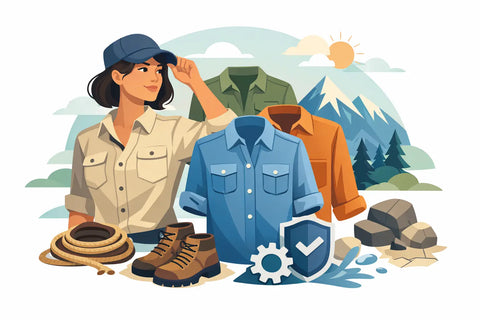
A shirt earns its place through repetition. The best durable shirts for women are not the ones that look new for one season. They hold their line after washing, soften without collapsing, and make sense with the rest of a working wardrobe.
Durability is not one attribute. It is the relationship between fiber, cloth, construction, fit, and care. A shirt can be heavy and still be poorly made. It can be finely woven and last for years if the fabric and finish suit its purpose. The right choice begins with how you actually live in it.
What Makes a Shirt Truly Durable?
Start with the fabric. Natural fibers are not automatically better, but they offer useful evidence in the hand. A tightly woven cotton poplin feels crisp and resists everyday abrasion. Oxford cloth has more texture and a little more body, making it a reliable choice for frequent wear. Twill brings diagonal structure, warmth, and a workwear reference that improves with age. Chambray is lighter, but a well-made version can take years of use.
Weight matters, though not in isolation. A lightweight shirt is useful under a jacket or through humid months. It should not be expected to perform like an overshirt. Midweight cloth is often the most practical middle ground: substantial enough for regular rotation, light enough to layer, and stable enough to retain shape.
Then look at construction. Durable shirts are built at the points that receive pressure: shoulders, armholes, side seams, cuffs, collar, and placket. Clean stitching, consistent stitch density, reinforced stress points, and securely attached buttons are quiet signs of care. French seams and flat-felled seams are particularly worthwhile in shirts intended for hard use, as enclosed edges reduce fraying and create a more finished interior.
A good collar also tells a story. It should sit cleanly at the neck without feeling stiff or theatrical. It should retain its form after washing. Collar stands, cuffs, and plackets need enough structure to last, but not so much fused stiffness that they bubble or crack over time.
Best Durable Shirts for Women: Choose by Use
There is no single best shirt for every life. A studio day, a long flight, a client meeting, and a weekend spent moving furniture ask different things of the same garment. Build around function rather than the idea of an all-purpose uniform.
The everyday button-up
For the shirt worn most often, choose cotton Oxford, compact poplin, or a medium-weight cotton blend with a low percentage of synthetic fiber. The goal is a fabric that breathes, launders easily, and does not turn limp by noon. A relaxed fit helps here. It allows movement through the shoulders and room for a T-shirt or fine knit beneath it when the weather changes.
Avoid sizing down simply to make a classic shirt feel more tailored. Strain across the chest, upper back, or button placket shortens a shirt’s useful life. A clean shoulder line and enough ease through the body will look more considered than a close fit fighting against motion.
The work shirt
A work shirt should have more presence. Cotton twill, brushed canvas, dense herringbone, and heavier chambray are strong candidates. These fabrics are made for friction and develop character rather than looking tired. Consider utility details only when they have a purpose: a chest pocket that holds a notebook, a loop that carries glasses, cuffs that roll securely, or a straight hem that works untucked.
This is where a unisex silhouette often makes particular sense. A slightly squared body, dropped shoulder, and generous sleeve offer range without becoming oversized for its own sake. One garment. Different bodies. Different lives.
The overshirt
An overshirt is not a substitute for a winter coat. It is a flexible outer layer for the space between. Choose a denser twill, cotton canvas, wool blend, or structured brushed cotton. The best versions have enough room for a knit underneath and enough shape to wear indoors without feeling like outerwear left on by accident.
Look for practical pocket placement and durable buttons or snaps. Metal hardware can be useful, but only if it is finished well and does not pull against the fabric. Buttons are often easier to repair and keep the garment adaptable over decades.
The refined shirt
Durable need not mean rugged. A crisp cotton shirt with a balanced, slightly relaxed cut can move between work, dinner, and travel without excess styling. Here, the cloth should be smooth but not fragile, and the details should be restrained: a well-proportioned collar, a stable placket, a hem that works tucked or loose.
White and pale blue remain useful because they reveal quality. Cheap fabric often becomes translucent, twists after washing, or loses its surface quickly. A better cloth stays composed. For less maintenance, choose washed black, deep navy, olive, ecru, or a narrow stripe that gives the shirt visual depth as it wears.
Read the Fabric Before You Buy
Composition labels offer a starting point, not a verdict. Long-staple cotton can produce a smooth, strong yarn, but weave density and finishing still determine how the shirt performs. Linen is naturally breathable and strong, though it wrinkles readily. That is part of its nature, not a defect. Linen-cotton blends can reduce the sharpness of those creases while keeping the dry, airy feel.
Synthetic fibers have a place when used deliberately. A small amount of nylon or polyester may improve abrasion resistance, dry time, or shape retention in an active shirt. The trade-off is feel and breathability. High synthetic content can trap heat and retain odor, especially in close-fitting garments. For a shirt meant to be worn often and washed less aggressively, natural fibers or low-blend fabrics usually age more gracefully.
Do not rely only on fabric weight listed online. Study the garment’s intended role. A 5-ounce chambray shirt may be ideal for summer and layering. A 9-ounce twill may be better as a shirt-jacket. Numbers help, but the cut, weave, and finish explain the rest.
Fit Is Part of Durability
A durable fabric cannot compensate for a strained fit. When a shirt pulls at the upper back, gapes at the chest, or catches at the armhole, the seams take the load. Over time, that stress becomes visible.
Check movement before deciding. Reach forward. Sit down. Cross your arms. Roll the cuffs. A shirt should follow the body without pulling sharply across the shoulder blades or lifting too far from the waistband. If you plan to layer, leave room for it from the beginning rather than buying a second version in a larger size later.
Length deserves equal attention. A shirt that is too short can rise with movement; one that is too long may feel bulky when tucked. Curved hems are useful for tucking, while straight hems offer greater flexibility for untucked wear. Neither is inherently better. The decision is about your wardrobe system.
Details Worth Paying For
The most useful details do not announce themselves. They make the shirt easier to live with, repair, and keep.
A spare button is a small but meaningful signal. So are buttons with enough thickness to withstand regular use, buttonholes finished cleanly, and cuffs that do not distort after a few washes. Examine pattern matching at the placket and pocket when relevant. It is not essential to performance, but it reflects the maker’s discipline.
Also consider repairability. Natural-fiber shirts are generally easier to mend, patch, dye, or alter. A shirt with a simple, well-built construction can remain in rotation long after a small tear or worn cuff would have ended the life of a lesser garment. This is the practical value of buying better.
Care That Extends the Wear
Durability is protected at home. Wash shirts when they need washing, not automatically after a brief wear. Spot-clean small marks first. Turn darker colors inside out, use cool water, and choose a mild detergent. High heat is hard on fibers, elastic components, dyes, and interfacing.
Air-drying preserves fabric and shape. If you use a dryer, remove shirts while still slightly damp and hang them to finish. Reshape collars and plackets by hand before drying. Ironing or steaming is not only cosmetic: it helps reset the cloth and keeps a shirt looking intentional.
Keep one repair habit. Replace a loosened button immediately. Mend a small seam opening before it widens. Addressing wear early is faster than replacing a shirt that could have served for years.
The right durable shirt will not stay pristine. It will become yours: softer at the cuffs, more familiar through the shoulders, marked by use rather than reduced by it. Choose a fabric with enough substance, a shape that allows a full day of movement, and construction worth maintaining. Then wear it until the history is visible.