
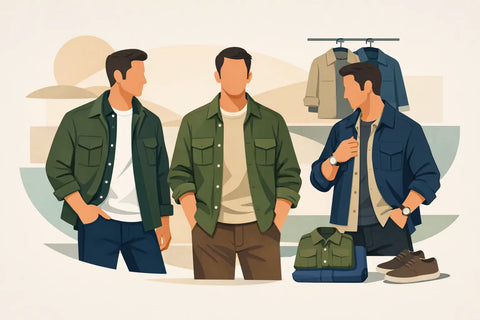
A utility shirt can carry more than one role. Overshirt. Mid-layer. Light jacket. Sometimes all three in the same week. That range is exactly why knowing how to layer utility shirts matters. The piece is simple, but the result depends on proportion, fabric weight, and how much structure you want in the outfit.
The best layered looks do not feel styled for effect. They feel resolved. A shirt sits clean over a tee, under a worker jacket, or open over knitwear without fighting the rest of the wardrobe. Utility dressing is practical, but it is also compositional. Every layer changes line, volume, and movement.
How to layer utility shirts starts with weight
Before color or styling, start with cloth. A utility shirt in crisp poplin behaves differently from one cut in brushed cotton twill, dense herringbone, or lightweight canvas. If the fabric is too thin, it can collapse under heavier outerwear and read more like a standard shirt. If it is too heavy, it can become rigid and awkward when worn beneath a jacket.
For most wardrobes, the most useful middle ground is a utility shirt with enough body to hold shape but enough ease to sit under outerwear. That makes it flexible across seasons. In warmer months, it can replace a jacket. In colder weather, it becomes the layer that adds structure between base and coat.
Hardware matters too. Patch pockets, reinforced seams, and a firmer placket give the garment presence. That presence is what allows it to anchor softer layers like jersey, merino, or fleece.
Build from the inside out
Layering works best when each piece has a clear job. The base layer manages comfort. The utility shirt defines the silhouette. The outer layer adds protection or sharpens the line.
A clean tee under a utility shirt is the most direct option. It keeps the shirt from feeling too formal and lets the texture of the overshirt do the work. A rib tank can do the same with a closer, more stripped-back fit. If you want more insulation without bulk, a fine knit jersey or lightweight merino works better than a thick sweatshirt.
The key is contrast without conflict. A smooth base layer under a textured utility shirt creates enough separation. If every layer has the same visual density, the outfit can flatten. If every layer competes, it starts to feel overbuilt.
Proportion is where most outfits fail
The common mistake is treating every layer as if it should fit the same way. It should not. A base layer can be close to the body. A utility shirt needs enough ease to move over that base. An outer jacket should then clear the utility shirt without pulling at the chest, hem, or sleeves.
Length matters as much as width. If the utility shirt extends too far below the jacket, the effect can feel accidental unless that contrast is deliberate. If everything ends at the same point, the outfit can look boxed in. Usually, small offsets are best. Let hems relate to one another rather than stack exactly.
Shoulders are another point of control. Utility shirts often look better with a little room through the shoulder and sleeve. That ease supports layering and gives the garment its workwear character. Too trim, and it loses function. Too oversized, and it can become difficult to wear under anything but a generous coat.
This is where experienced buyers tend to trust the garment more than the styling formula. A well-cut utility shirt does not need tricks. It needs enough volume to layer and enough structure to hold a line.
Three reliable ways to wear it
The first is the lightest: utility shirt over a tee or tank. Worn open, it reads easy and direct. Worn buttoned, it becomes more architectural. This is the version that works through spring, transitional weather, and indoor dressing where a jacket feels excessive.
The second is the working middle: utility shirt under a chore coat, worker jacket, or field jacket. Here, the shirt should not be the bulkiest layer. Let it support the outerwear rather than compete with it. Twill under duck canvas works. Brushed cotton under moleskin works. The textures can be related, but the weights should still step upward from inside to outside.
The third is the colder build: knit or thermal base, utility shirt, then substantial outerwear. In this arrangement, the shirt acts almost like a frame. It prevents heavier coats from swallowing the body and keeps the outfit from becoming too soft. This is especially useful with wool outerwear, where the utility shirt adds edge and clarity.
How to layer utility shirts across seasons
In warm weather, keep the system open. Use a lighter utility shirt in cotton poplin, washed chambray, or airy twill over a sleeveless or short-sleeve base. The shirt should move, not cling. Sleeves can be rolled, but only if the cloth softens naturally when turned back. A stiff roll that keeps dropping is rarely worth forcing.
In fall, this piece comes into its own. A utility shirt over jersey and under outerwear gives enough insulation for changing temperatures without committing to a heavy coat all day. This is where seasonless wardrobes start to make sense. One shirt can shift from outer layer at noon to middle layer at night.
In winter, the question is less about whether you can layer it and more about how much room exists in the coat above it. Dense shirts in twill, flannel, or brushed canvas can replace lighter knits entirely. But if both shirt and coat are stiff, mobility suffers. Sometimes a softer shirt under a structured coat is the better trade.
Color should stabilize the outfit
Utility shirts tend to work best in grounded tones: ecru, faded olive, ink, charcoal, tobacco, washed navy. These shades layer easily because they carry depth without demanding attention. The point is not to keep everything muted. The point is to let color support function.
Monochrome or near-monochrome layering usually makes utility garments look more refined. Olive over stone, navy over faded blue, charcoal over black. The result is quiet but not flat because texture does the separating. If you want stronger contrast, keep one layer neutral and let the shirt be the point of definition.
Pattern is possible, but it changes the tone. A striped base under a plain utility shirt can work. Multiple patterns with visible pocketing and topstitching often read too busy. Utility clothing already has detail built in.
Fit across different bodies
Because utility shirts often sit between shirt and jacket, they suit a wide range of bodies. The same garment can feel precise, oversized, or softly structured depending on who wears it. That flexibility is part of the appeal.
Still, the right fit depends on how you plan to use it. If you want it mainly as an overshirt, prioritize ease in the chest, shoulder, and upper arm. If you expect to wear it under tailoring or a narrower coat, keep the body cleaner and the fabric lighter. There is no universal ideal. It depends on your climate, your outerwear, and how much volume the rest of your wardrobe carries.
For wider trousers, a boxier utility shirt usually feels balanced. With straighter or slimmer pants, a shirt with slightly less volume can keep the silhouette from tipping too top-heavy. The relationship between top and bottom matters more than any single measurement.
Let the shirt age into the system
The best utility shirts improve with repetition. Seams soften. Elbows shape. The cloth starts to remember the body. Layering gets easier once the garment has been worn enough to settle.
That is another reason not to over-style it. Utility clothing has its own authority. It does not need constant novelty, only good placement in the wardrobe. Worn often, it becomes the piece you reach for when the weather is unclear and the outfit needs structure.
If you are building a wardrobe to last, think of the utility shirt as a hinge piece. It connects base layers to outerwear, work to weekend, colder mornings to warmer afternoons. At WORKWARE, that kind of range is the point. One garment. Different bodies. Different lives.
Start with fabric, check the proportions, and let the shirt do what it was made to do. The best layering is not complicated. It is clear, useful, and worn often enough to become second nature.