
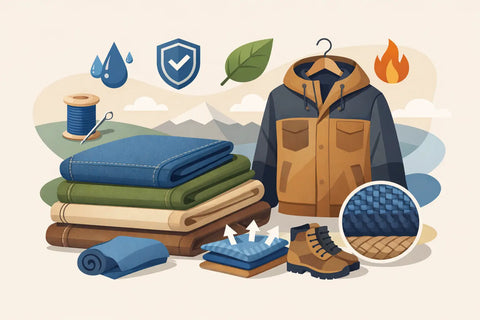
A garment usually fails in the same predictable places - knees, elbows, seat, cuffs, placket, collar. Not because the idea was wrong, but because the fabric was. If you are weighing the best durable clothing fabrics, the question is not simply which material is strongest. It is which fabric holds its structure, absorbs wear well, and improves with use rather than collapsing under it.
Durability is rarely one thing. Abrasion resistance matters. So does tear strength, yarn quality, weave density, fiber length, and finishing. A fabric can feel substantial on a hanger and still wear out badly if the yarn is weak or the surface finish does all the work. The opposite is also true. Some of the longest-lasting fabrics do not announce themselves immediately. They reveal their value after a year of use, then five.
What makes the best durable clothing fabrics last
Weight helps, but weight alone is not the measure. A heavy fabric with loose construction can distort quickly. A midweight fabric with tightly woven yarns can outlast it. Long-staple cotton, high-twist yarns, ring-spun construction, and dense weaves generally age better than cheaper shortcut versions of the same cloth.
The intended use matters just as much. A work jacket, an overshirt, and a trouser do not need the same kind of durability. Jackets take friction at the cuff and shoulder. Pants need resistance at the seat and knee. Shirts need enough strength to survive repeated laundering without turning papery. The best choice is always tied to the job the garment has to do.
1. Cotton canvas
Canvas remains one of the clearest answers for anyone building around utility. It is plain-woven, tightly constructed, and naturally resistant to abrasion. In practical terms, it can take repeated wear, carry shape well, and soften slowly without losing authority.
Good canvas has body. It stands away from the frame at first, then learns the body over time. That quality makes it especially strong in chore coats, worker jackets, overshirts, and bags. It also handles repairs well. A patched canvas garment often looks better, not worse.
The trade-off is flexibility. Heavy canvas can feel rigid in the beginning, and cheaper versions may crease harshly or feel dry. For everyday wear, midweight canvas often performs better than the heaviest option because it balances structure with movement.
2. Denim
Denim earns its reputation because it wears visibly and often beautifully. A good denim is not only durable. It records use. That makes it distinct from fabrics that merely survive.
Its strength comes from twill construction and yarn character. Ring-spun denim, especially in a higher ounce weight, tends to outlast flat, weak, mass-market alternatives. It resists abrasion, holds shape well, and can be repaired repeatedly. In trousers, chore jackets, and skirts, it remains one of the most reliable long-term fabrics available.
Not all denim is equally durable. Stretch denim is easier to wear but usually less stable over time. The elastane that improves comfort can also weaken recovery and shorten lifespan. If longevity is the priority, rigid denim is still the better answer.
3. Ripstop cotton and cotton-nylon blends
Ripstop was designed for failure prevention. The grid structure limits tearing, which is why it has long belonged to military and field garments. In daily wear, that means a lighter cloth can still perform under stress.
This is one of the best durable clothing fabrics when you want function without bulk. Utility pants, field shirts, and lighter outer layers benefit from it because it offers resilience in a more mobile form. Cotton ripstop feels drier and more natural against the skin. Cotton-nylon versions add strength and faster drying, which can be useful in variable conditions.
The compromise is surface character. Ripstop can feel more technical and less rich than canvas or denim. For some wardrobes that is exactly right. For others, especially those built around heritage texture, it may feel too engineered.
4. Wool serge and dense wool twill
Durability is often discussed as if it belongs only to work pants and outer shells. Wool complicates that assumption. A tightly woven wool serge or twill can wear for years while maintaining shape, drape, and insulation.
This is a different kind of endurance. Wool does not usually win on brute abrasion against heavy canvas, but it excels at recovery. It resists wrinkling, manages temperature well, and often needs less washing. In trousers, overshirts, and tailored outer layers, that means less stress over time.
Quality matters here more than marketing language. Dense cloth, good yarn, and thoughtful finishing make the difference. Softer, looser woolens can pill or thin quickly. Harder-wearing wools may feel slightly dry at first, but they tend to reward patience.
5. Cotton drill
Drill sits in a useful middle ground. Like denim, it uses a twill structure, but it often presents with a cleaner face and a more restrained visual language. That makes it excellent for garments that need utility without looking overly rugged.
Work trousers, fatigue pants, and chore-inspired skirts often benefit from drill because it is durable, easy to wear, and less stiff than comparable canvas. It also takes garment dye well, which can give depth without relying on surface treatments that wear away unevenly.
For many wardrobes, drill is the quiet workhorse. It may not get the same attention as selvedge denim or waxed canvas, but it often proves more versatile in practice.
6. Corduroy
Corduroy is underestimated by anyone who only reads it as seasonal texture. In the right wale and weight, it is a durable, practical cloth with surprising longevity. The ridged surface can disguise wear well, and the underlying woven base gives it more strength than people assume.
Wide-wale versions feel more casual and substantial. Fine-wale versions are cleaner and easier to dress up. Both can last well in trousers, overshirts, and jackets if the cloth is dense and the pile is not overly fragile.
There are limits. Corduroy can wear flat at high-friction points, and low-quality versions lose their face quickly. But good corduroy ages with a calm kind of honesty. It softens, the ridges relax, and the garment often becomes better integrated into daily wear.
7. Linen blends, not linen alone
Pure linen has strength, but it is not always the best answer if your benchmark is hard daily abrasion. It can crease sharply and, depending on weight, wear through faster at stress points than sturdier cotton work fabrics.
Blended linen is more useful in a durability conversation. Linen-cotton and linen-wool fabrics often retain linen's breathability and dry hand while gaining stability, shape retention, or resistance to breakdown. For warm-weather trousers, shirts, and light jackets, these blends can extend the life of a garment without sacrificing seasonality.
This is where nuance matters. Linen is durable as a fiber, but the final garment still depends on weave, weight, and use case. A linen camp shirt and a linen-blend work trouser should not be judged by the same standard.
8. Waxed cotton
Waxed cotton adds a protective layer to an already reliable base fabric. In outerwear, that can mean better resistance to weather, dirt, and surface wear. It has a long history in field use for a reason.
Its durability is practical rather than pristine. Waxed cotton marks, creases, and develops a lived-in finish quickly. That is part of the appeal. The fabric does not stay untouched. It gains evidence. Reproofing can extend its life even further, making it one of the more repairable and maintainable options in outerwear.
The trade-off is climate and feel. It can be too warm or too stiff for some uses, and not everyone wants the patina. But for jackets meant to age in public, few fabrics do it better.
How to choose the best durable clothing fabrics for your wardrobe
Start with friction, not fantasy. Think about where you wear through garments first. If it is the knee and seat, choose denim, drill, or canvas. If you need lighter movement and tear resistance, ripstop makes more sense. If you need shape, thermal range, and fewer washes, dense wool deserves more attention.
Then consider how you want the garment to age. Some fabrics fade and mark dramatically. Others hold a quieter surface. Neither is better. It depends on whether you want the garment to show its years or absorb them discreetly.
Construction still matters. Even the best cloth can be wasted on poor sewing, weak seams, bad pocket placement, or cheap trims. Fabric and make need to agree. That is where a well-built garment separates itself from a fabric swatch with ambition.
For a wardrobe built to stay, durability is not about choosing the harshest cloth available. It is about choosing materials with enough integrity to keep becoming themselves through wear. Buy better. Keep forever.