
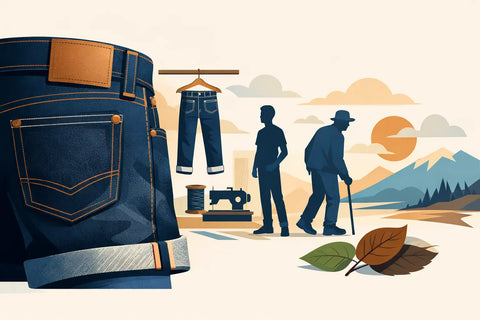
A clean selvedge line at the outseam is a small detail with a long history. It signals fabric woven slowly on narrow shuttle looms, then cut and sewn with less waste at the edge. Selvedge denim is not automatically better because it carries a colored ID line. Its value is in the cloth itself: dense construction, irregular character, and the possibility of a pair becoming more specific to its wearer over time.
For people who buy fewer, better garments, that distinction matters. Denim should not merely survive wear. It should record it.
What Selvedge Denim Actually Means
Selvedge comes from “self-edge.” On a traditional shuttle loom, a single continuous weft yarn travels back and forth across a narrow width of fabric. The loom finishes both edges as it weaves, creating a tightly bound border that will not fray. This is the selvedge.
Modern projectile and air-jet looms produce wider fabric much faster. They are efficient, consistent, and essential to much of contemporary denim production. But their cut edges require overlocking after the fabric leaves the loom. Shuttle looms move more slowly and yield less yardage, which helps explain why selvedge fabrics often cost more before a pattern is even cut.
The colored thread in the finished edge, commonly red but also blue, green, white, or multi-stripe, is an identifier rather than a quality grade. It may point to a mill, a fabric run, or a brand’s specification. A red line does not make a jean well made. The yarn quality, dyeing, weave tension, cut, and sewing all still matter.
A finished outseam is where this detail is most visible. Turn up the cuff and the narrow woven edge appears. On a straight leg, a relaxed taper, or a wide work pant, that single line brings a little of the fabric’s making to the surface.
Why the Fabric Feels Different
Selvedge denim often has texture that broader, faster-made denim smooths away. Shuttle looms can produce subtle variations in tension. Slubs, small irregularities in the yarn, may rise through the surface. The fabric can feel dry, crisp, hairy, or grainy at first, depending on the cotton, yarn twist, and finishing process.
This is not a defect. It is part of the material’s visual life.
Many selvedge fabrics use rope-dyed indigo yarns. In rope dyeing, yarns are repeatedly dipped in indigo so color builds around a lighter core. As the outer indigo wears away, the undyed center begins to show. That is the basis of high-contrast fading, from whiskers at the lap to honeycombs behind the knees and abrasion at the pocket edge.
But dramatic contrast is only one outcome. A softer, more even fade can be just as compelling. Wash frequency, movement, climate, work, fit, and the fabric’s initial dye depth all shape the result. There is no correct fade. There is only evidence of use.
Some selvedge denim is rigid and unsanforized, meaning it has not been mechanically pre-shrunk. Some is sanforized for more predictable sizing. Some is one-wash, rinsed to remove much of the initial shrinkage and stiffness. Others are blended with a small amount of stretch or woven at a lighter weight for a less demanding break-in. The term selvedge describes the fabric edge, not a single hand feel or wearing experience.
Weight, Shrinkage, and the Reality of Break-In
Fabric weight is usually measured in ounces per square yard. Around 11 to 13 ounces is a practical middle ground: substantial enough for structure, manageable through most of the year. Fourteen to 16 ounces feels denser and more protective, often with a sharper break-in period. Anything above that belongs to a more specialized category. It can be rewarding, but it asks for commitment.
Heavier is not inherently more durable. A well-woven midweight cloth may serve daily use better than a very heavy fabric that remains uncomfortable or sits unworn. Consider climate, commute, and how often the garment will actually enter rotation. A fabric built for decades only works if it works for your life.
Unsanforized denim requires more attention. It can shrink noticeably in the waist, inseam, rise, and overall width after soaking or washing. Measurements matter more than tagged size. If the fabric is raw and unsanforized, understand the shrinkage before hemming or committing to a close fit.
Sanforized denim removes much of that uncertainty, though it can still tighten slightly after the first wash. One-wash denim is the easiest entry point for many wardrobes: the cloth has settled, the size is more legible, and the character remains intact.
Rigid denim also changes with body heat and movement. The waistband gives. The seat softens. Knee points form. A pair that feels precise on day one can become familiar within a few wears. That is why fit should be judged standing, sitting, walking, and climbing stairs, not only under a fitting-room mirror.
Choosing a Selvedge Denim Fit That Lasts
The best cut is the one that gives the fabric room to develop without asking your body to accommodate it. For a daily pair, look first at the rise, hip, and thigh. These points determine comfort more than the label attached to the leg shape.
A higher rise often works well with a worker jacket, a tucked photographer shirt, or a cropped knit because it creates a stable proportion through the waist. A fuller thigh and a straight or gently tapered leg allow movement while retaining structure. Wider silhouettes make room for the weight and drape of denim, especially when paired with a compact top layer.
Very slim raw denim can produce striking fade patterns because the cloth stays close to the body. It can also strain at the seat, knees, and pockets, limiting how naturally the garment lives. A little ease tends to age better. It wears across different bodies, different days, and different uses.
Length deserves the same consideration. A single cuff puts the selvedge edge in view and protects the hem from excess drag. Multiple stacked cuffs can create bulk, particularly with heavier denim. If you prefer a clean break, hem after the fabric has settled through its first wash or soak. For unsanforized cloth, do not rush that decision.
Construction Beyond the ID Line
A good pair of denim is a system of small decisions. The selvedge edge is visible, but the less visible details carry equal weight.
Look at the stitch density and the tension of the seams. Excessively tight thread can pucker the fabric. Loose stitching can fail early. Check the inseam, rise seam, belt loops, pocket corners, and fly. Bar tacks or rivets at stress points are useful, but they should support sound construction rather than compensate for weak sewing.
Pocket shape affects more than appearance. Deep, usable pockets belong to the workwear tradition for a reason. A substantial pocket bag, reinforced opening, and placement that sits well on the body make a difference over years of carrying keys, a phone, or a notebook.
Hardware should feel proportionate to the fabric. A button fly has heritage appeal and is simple to repair, though a zip fly is faster in daily use. Copper rivets can develop a rich patina but may mark delicate furniture or scratch surfaces. These are not faults. They are practical choices worth considering before purchase.
For WORKWARE, that is the measure: details with a past, forms for now. A garment earns its place through fabric, function, and repeat wear.
Washing Without Turning Denim Into a Ritual
Raw denim culture sometimes treats washing as a test of discipline. It does not need to be. Delaying the first wash can preserve darker indigo and encourage more defined contrast, but going too long without cleaning can weaken fibers where sweat and friction collect. Denim is cotton. It benefits from sensible care.
Spot-clean minor marks when possible. Air the garment between wears. When it needs a full wash, turn it inside out, use cold water, and choose a gentle cycle or hand wash. Wash with similar dark colors. Drying flat or hanging from the waistband helps preserve shape; high heat can increase shrinkage and stress fibers.
The right schedule depends on use. A pair worn lightly in rotation may go many wears between washes. A pair used for commuting, travel, studio work, or physical labor should be cleaned sooner. Clean denim can still fade beautifully. It simply tells a more honest story about how it has been worn.
Small repairs should happen early. Reinforce a thinning pocket edge before it opens. Patch a developing knee before it becomes a tear. Reattach a loose belt loop before it pulls at the waistband. Visible mending is not an apology. On a well-worn garment, it becomes part of the construction.
A pair of selvedge denim asks for attention, but not ceremony. Choose the weight that suits your climate. Choose the fit that lets you move. Wash it when it needs washing. Then keep wearing it long enough for the cloth to become yours.