
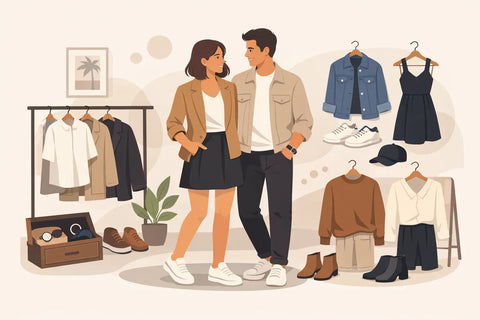
A shared wardrobe is not two people dressing alike. It is a practical agreement between proportion, fabric, and use. The best shared wardrobe couple outfit examples begin with garments that hold their shape, accommodate different bodies, and become more convincing with wear.
A worker jacket passed from one set of shoulders to another carries a different line each time. Wide trousers can sit high on one person and low on the other. A substantial shirt can be a top layer, an overshirt, or the whole point of an outfit. This is the value of unisex clothing with real construction: one garment, different bodies, different lives.
Build the shared rail around function
The shared rail needs fewer pieces than two separate wardrobes, but each piece has to earn its place. Start with fabrics that are resilient enough for regular rotation: dense cotton twill, broken-in denim, sturdy poplin, wool blends, and jersey with enough weight to keep its form. Thin fabrics often become limiting when fit changes from person to person. A firmer cloth gives the silhouette structure without demanding a precise body type.
Fit is equally practical. Look for relaxed shoulders, adjustable waist tabs, cuffs that can be rolled, and rises that work at more than one point on the waist. A garment should not need to fit identically to work well. In fact, the shift is part of the appeal. One person may wear a jacket cleanly over a tee; the other may use it as a roomy outer layer over knitwear.
Color makes the system easier. Navy, ecru, charcoal, washed black, olive, indigo, and tobacco have enough depth to stand alone while working together across seasons. This is not a rule against color. It is a case for choosing color with range. A muted red chore coat or a striped oxford becomes more useful when the rest of the rail is quiet.
Shared wardrobe couple outfit examples for daily wear
1. The worker jacket and straight denim uniform
Begin with a cotton worker jacket in navy or faded black, a white or natural-color tee, and straight-leg indigo denim. On a shorter frame, the jacket can be worn open with a slightly cropped tee or a higher trouser rise to maintain definition. On a taller frame, it can sit over a longer shirt with the sleeves rolled once.
The ingredients are familiar. The difference is in the cut: a jacket with room through the chest and a denim leg that falls cleanly rather than clings. Finish with plain leather shoes, canvas sneakers, or a substantial loafer. It works for a studio day, a neighborhood dinner, or travel when you want one reliable layer close at hand.
2. Balloon pants, a tucked shirt, and a compact layer
Balloon pants are often more shareable than slim trousers because the volume is designed into the leg, not borrowed from the wearer. Choose a pair in cotton twill or ripstop, then balance it with a photographer shirt, oxford, or fine knit tucked at the waist.
One person can wear the pants high with a narrow belt and a close-fitting tank beneath an open shirt. The other can wear the same pair lower on the hip with a sweatshirt and a cropped jacket. The trouser does not need to create the same outline twice. It only needs a disciplined shape: room at the thigh, a taper at the ankle, and enough fabric weight for the volume to hold.
3. The overshirt as an outer layer
A heavy overshirt is one of the most useful shared pieces because it answers several weather conditions without looking temporary. Wear a brushed cotton or wool-blend overshirt over a jersey tee and utility trousers when the temperature is mild. When it drops, layer it under a larger coat.
For contrast, one partner can keep the shirt buttoned and let it read as a top, paired with full-length pants and boots. The other can leave it open over a ribbed base layer, with a skirt, denim, or loose fatigue pants. The shared item creates continuity; the lower half keeps each look personal.
4. A chore coat with soft tailoring
Workwear and tailoring meet well when both sides are allowed to remain themselves. Pair a chore coat in cotton drill with pleated trousers, a crisp shirt, and leather derbies. The coat keeps the outfit grounded. The trousers add a cleaner line without making it feel formal.
This combination is especially strong for couples who need clothes that move between work and evening plans. One wearer might choose a longer, fuller trouser with the coat worn loose. Another might choose a cropped, tapered trouser and button the coat to the neck. Keep accessories restrained. A belt, watch, or small bag is enough.
5. Shared denim with different proportions
A good denim jacket and a good pair of jeans should be able to cross the wardrobe without becoming a costume. Avoid matching washes unless you want the full denim effect. A dark jacket with faded jeans, or a washed jacket with black denim, gives the outfit more depth.
On one body, use the jacket to create a boxy upper line over wide-leg jeans. On another, wear it with a longer shirt underneath and a narrower straight leg. The point is not to chase an exact fit. It is to let the denim establish a familiar material language while proportion does the individual work.
6. The utility trouser and striped knit
Utility trousers can look overly literal when every other element is also rugged. A striped cotton knit, fine merino crewneck, or simple cardigan gives them a more considered finish. Choose trousers with useful pockets but a clean front, in olive, charcoal, or deep navy.
Wear the knit tucked in slightly at the front, or let it fall straight if the trouser sits higher on the waist. A compact shoe keeps the outfit from becoming too heavy. This is an easy weekend formula, but it is not casual by default. The quality of the knit and the shape of the trouser determine whether it reads as considered or merely convenient.
7. A shared dress shirt, worn two ways
The most flexible shirt in a shared wardrobe is not necessarily oversized. It needs enough shoulder room, a firm collar, and a hem that looks intentional whether tucked or untucked. A blue-and-white stripe, washed chambray, or dense white poplin will do more work than a novelty print.
One person can wear it buttoned with tailored pants, sleeves rolled and collar open. The other can layer it over a tank with shorts, tie it at the waist over a dress, or wear it under a vest. A shirt of this kind is useful because it can sharpen relaxed clothing and soften more structured pieces.
Make sharing easier without flattening personal style
A shared wardrobe works best when the garments overlap, not when every outfit does. Keep a few personal anchors outside the common rail: a specific shoe shape, a favorite piece of jewelry, a fitted knit, a skirt, a cap, or a particular bag. These details prevent the arrangement from feeling anonymous.
It also helps to define what is genuinely shared. Outerwear, shirts, roomy knitwear, denim jackets, utility trousers, and scarves are natural candidates. Underlayers, shoes, and highly fitted pants are often less practical. There is no virtue in forcing a garment into shared use if it only works for one person.
Care matters more when two people rely on the same pieces. Hang jackets properly. Wash denim and twill less often, but wash them well when needed. Mend a loose button before it becomes a missing one. A shared wardrobe asks for attention, then returns it through more wear and fewer replacements.
WORKWARE approaches this as a system rather than a matching exercise. Details with a past. Forms for now. The strongest shared clothes are built for repetition, not one photograph.
Leave enough room for the garment to change hands. That is where a wardrobe begins to feel lived in, rather than simply coordinated.